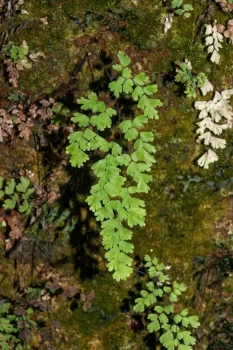
Common Maidenhair Fern: A Delicate Native Beauty for Shady Spaces
If you’ve ever wandered through a shaded woodland and spotted what looks like nature’s own lace curtains swaying gently in the breeze, you’ve likely encountered the enchanting common maidenhair fern (Adiantum capillusveneris). This perennial native fern brings an almost magical quality to gardens with its impossibly delicate fronds and graceful presence.
What Makes Common Maidenhair Fern Special?
Common maidenhair fern is a true North American native, naturally occurring across an impressive range that spans from Canada down through the lower 48 states, Hawaii, and Puerto Rico. You can find this adaptable beauty growing wild in states from Alabama to Utah, British Columbia to Virginia, making it one of our continent’s most widely distributed ferns.
- Species observed
- No observations
Unlike flowering plants, ferns like the common maidenhair reproduce through spores rather than seeds, giving them an ancient, primordial charm that connects us to the earliest plant life on Earth.
Identifying Common Maidenhair Fern
Spotting a common maidenhair fern is easier than you might think once you know what to look for:
- Fronds: Delicate, fan-shaped leaflets that seem to float on thin, dark stems
- Height: Reaches about 1.7 feet at maturity
- Texture: Fine, almost ethereal appearance with a porous quality
- Growth pattern: Spreads via rhizomes (underground stems) creating colonies over time
- Color: Bright green foliage that maintains its color through spring and summer
Is Common Maidenhair Fern Beneficial for Your Garden?
Absolutely! This native fern offers several wonderful benefits:
Shade Solution: If you’ve got those tricky shaded spots where nothing seems to thrive, common maidenhair fern is your friend. It’s naturally shade tolerant and actually prefers protection from direct sunlight.
Natural Beauty: The fine-textured fronds add an elegant, woodland feel to any landscape. They’re particularly stunning when planted en masse or used as a delicate backdrop for bolder shade plants.
Low Maintenance: Once established, this fern has moderate growth rate and doesn’t require frequent intervention, making it perfect for naturalized gardens.
Native Plant Benefits: As a native species, it supports local ecosystems and requires less water and maintenance than non-native alternatives.
Where Does Common Maidenhair Fern Fit in Your Landscape?
This versatile fern adapts to various garden styles:
- Woodland Gardens: Perfect for creating that authentic forest floor look
- Rock Gardens: Softens hard edges with its graceful fronds
- Shade Borders: Excellent as an understory plant beneath trees and shrubs
- Native Plant Gardens: A must-have for authentic regional plantings
Growing Conditions and Care
Common maidenhair fern has some specific preferences, but they’re not difficult to accommodate:
Moisture: This fern loves consistent moisture and has high water needs. In different regions, it shows interesting flexibility – sometimes preferring wetland conditions, other times thriving in upland areas.
Soil: Adapts well to medium and fine-textured soils. It can handle pH levels from 6.0 to 8.0 and has high tolerance for calcium carbonate.
Temperature: Hardy to about -33°F, making it suitable for a wide range of climates with at least 120 frost-free days.
Light: Shade tolerant – actually prefers it! Protect from harsh direct sunlight.
Planting and Establishment
Getting started with common maidenhair fern is relatively straightforward:
- Best planted in spring when active growth begins
- Space plants considering their slow to moderate spread rate
- Keep soil consistently moist, especially during establishment
- Mulch around plants to retain moisture and suppress weeds
- Be patient – this fern has a moderate lifespan and takes time to establish fully
The Bottom Line
Common maidenhair fern might just be the perfect solution for those challenging shaded areas in your garden. Its native status means it’s perfectly adapted to local conditions, while its delicate beauty adds a touch of woodland magic to any landscape. While it may not attract pollinators like flowering plants do, it brings its own special charm and ecological value as a native species.
If you’re looking to create a low-maintenance, naturalistic garden that celebrates North American native plants, common maidenhair fern deserves a spot on your list. Just remember to keep it happy with consistent moisture and plenty of shade, and this graceful fern will reward you with years of delicate beauty.