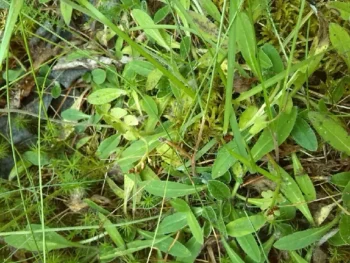
Common Moonwort: A Mysterious Native Fern Worth Knowing
Meet the common moonwort (Botrychium lunaria), one of North America’s most intriguing yet elusive native ferns. This delicate perennial might not win any garden beauty contests, but it holds a special place in the hearts of native plant enthusiasts and naturalists who appreciate subtle woodland treasures.
What Makes Common Moonwort Special?
Common moonwort is a small, rhizomatous fern that typically reaches just one foot in height. Don’t let its modest size fool you – this little plant has a fascinating growth pattern. It produces distinctive moon-shaped leaflets (hence the name moonwort) arranged in a delicate, lacy pattern that gives it an almost otherworldly appearance.
Unlike showy garden plants, common moonwort offers quiet charm. Its fine-textured, green foliage creates subtle interest in woodland settings, and its slow growth rate means it won’t overwhelm other plants in naturalized areas.
Where Common Moonwort Calls Home
This remarkable fern boasts an impressive native range across North America. It’s found throughout Canada (from British Columbia to Newfoundland), Alaska, and many northern U.S. states including Maine, Michigan, Minnesota, Montana, and extending into some western and southwestern states like California, Colorado, and New Mexico. Common moonwort is also native to Greenland and St. Pierre and Miquelon.
- Species observed
- No observations
A Word of Caution: Rarity Matters
Here’s where things get important for responsible gardeners. Common moonwort has a conservation status that suggests it may be uncommon in some areas (Global Conservation Status of S5T3?). This means if you’re lucky enough to encounter this fern in the wild, it’s best to admire it from a distance rather than attempting to transplant it.
Growing Conditions and Habitat Preferences
Common moonwort thrives in specific conditions that can be challenging to replicate in typical garden settings:
- Moisture: Prefers consistently moist conditions and has facultative wetland status in many regions
- Soil: Adapted to coarse and medium-textured soils with pH ranging from 5.8 to 7.2
- Light: Tolerates intermediate shade conditions
- Temperature: Cold-hardy down to -33°F, thriving in USDA zones 2-7
- Drainage: Requires medium moisture use with low drought tolerance
Is Common Moonwort Right for Your Garden?
Honestly? Probably not, and here’s why that’s okay. Common moonwort is notoriously difficult to cultivate and is listed as having No Known Source for commercial availability. This fern has evolved for specific woodland conditions that are hard to replicate in managed landscapes.
Additionally, with its uncertain conservation status, it’s more appropriate to focus on creating habitat that might naturally support this species rather than attempting direct cultivation.
Wildlife and Ecological Benefits
While specific wildlife benefits aren’t well-documented for common moonwort, ferns in general provide:
- Habitat structure for small woodland creatures
- Ground cover that helps maintain soil moisture
- Part of the complex understory ecosystem in woodland environments
Better Alternatives for Native Fern Lovers
If you’re drawn to native ferns but want something more garden-friendly, consider these alternatives that are easier to source and establish:
- Christmas fern (Polystichum acrostichoides)
- Lady fern (Athyrium filix-femina)
- Royal fern (Osmunda regalis)
- Cinnamon fern (Osmunda cinnamomea)
The Bottom Line
Common moonwort represents the wild, untamed beauty of our native woodlands. While it’s not a plant you’ll likely grow in your garden, knowing about it helps us appreciate the incredible diversity of native flora in North America. If you’re fortunate enough to spot this delicate fern during woodland walks, take a moment to appreciate its quiet elegance – and leave it undisturbed for future generations to discover.
Sometimes the best way to honor a native plant is simply to protect and preserve the wild spaces where it naturally thrives.