Native Plants

Common Sandaster

Corethrogyne filaginifolia var. filaginifolia

USDA symbol: COFIF

perennial subshrub

Lower 48 states: native

If you’re looking for a low-maintenance perennial that brings both beauty and ecological value to your California garden, meet the common sandaster (Corethrogyne filaginifolia var. filaginifolia). This delightful native wildflower might not have the flashiest name, but it certainly knows how to make itself at home in water-wise landscapes while ...

Common Sandaster may be listed as rare in your area.
Global Conservation Status

Status: S4T3T4 | Subspecies or varieties apparently secure: Uncommon but not rare, and usually widespread. Possible cause for longterm concern. Typically more than 100 occurrences or more than 10,000 individuals.

Global Conservation Status

Status: S4T3? | Apparently Secure: Uncommon but not rare, and usually widespread. Possible cause for longterm concern. Typically more than 100 occurrences in the state or more than 10,000 individuals.

Global Conservation Status

Status: S4T1 | Apparently Secure: Uncommon but not rare, and usually widespread. Possible cause for longterm concern. Typically more than 100 occurrences in the state or more than 10,000 individuals.

Global Conservation Status

Status: S4T3? | Apparently Secure: Uncommon but not rare, and usually widespread. Possible cause for longterm concern. Typically more than 100 occurrences in the state or more than 10,000 individuals.

Global Conservation Status

Status: S4T3?Q | Apparently Secure: Uncommon but not rare, and usually widespread. Possible cause for longterm concern. Typically more than 100 occurrences in the state or more than 10,000 individuals.

Global Conservation Status

Status: S4T1 | Apparently Secure: Uncommon but not rare, and usually widespread. Possible cause for longterm concern. Typically more than 100 occurrences in the state or more than 10,000 individuals.

Global Conservation Status

Status: S4T3? | Apparently Secure: Uncommon but not rare, and usually widespread. Possible cause for longterm concern. Typically more than 100 occurrences in the state or more than 10,000 individuals.

Global Conservation Status

Status: S3Q | Vulnerable: Found only in a restricted range (even if abundant at some locations). Typically 21 to 100 occurrences or between 3,000 and 10,000 individuals.

Global Conservation Status

Status: S4T3? | Apparently Secure: Uncommon but not rare, and usually widespread. Possible cause for longterm concern. Typically more than 100 occurrences in the state or more than 10,000 individuals.

Global Conservation Status

Status: S4T3T4 | Subspecies or varieties apparently secure: Uncommon but not rare, and usually widespread. Possible cause for longterm concern. Typically more than 100 occurrences or more than 10,000 individuals.

Global Conservation Status

Status: S4T2T4 | Subspecies or varieties apparently secure: Uncommon but not rare, and usually widespread. Possible cause for longterm concern. Typically more than 100 occurrences or more than 10,000 individuals.

Global Conservation Status

Status: S4T3? | Apparently Secure: Uncommon but not rare, and usually widespread. Possible cause for longterm concern. Typically more than 100 occurrences in the state or more than 10,000 individuals.

Global Conservation Status

Status: S4T3T4 | Subspecies or varieties apparently secure: Uncommon but not rare, and usually widespread. Possible cause for longterm concern. Typically more than 100 occurrences or more than 10,000 individuals.

Common Sandaster: A Charming California Native for Water-Wise Gardens

If you’re looking for a low-maintenance perennial that brings both beauty and ecological value to your California garden, meet the common sandaster (Corethrogyne filaginifolia var. filaginifolia). This delightful native wildflower might not have the flashiest name, but it certainly knows how to make itself at home in water-wise landscapes while supporting local wildlife.

What Makes Common Sandaster Special?

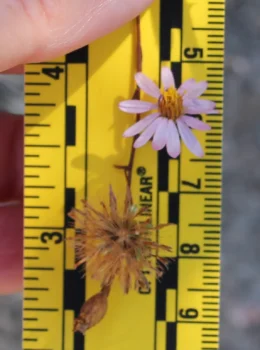
Common sandaster is a true California native, found naturally throughout the Golden State. As a perennial forb herb, this plant returns year after year without the woody stems of shrubs or trees. Instead, it forms attractive clumps of narrow, grayish-green leaves topped with clouds of small, daisy-like flowers that typically bloom in white to pale purple hues.

What really sets this plant apart is its remarkable drought tolerance and ability to thrive in challenging conditions that would stress many other garden plants. Once established, common sandaster asks for very little water while delivering consistent beauty and ecological benefits.

Where Does Common Sandaster Grow Naturally?

This hardy native calls California home, where it has adapted to the state’s Mediterranean climate and diverse soil conditions. You’ll find it growing naturally in coastal areas, inland valleys, and foothill regions throughout California.

  • Species observed
  • No observations

Why Choose Common Sandaster for Your Garden?

There are several compelling reasons to consider adding common sandaster to your landscape:

  • Water-wise gardening: Once established, this drought-tolerant native requires minimal supplemental watering
  • Pollinator magnet: The daisy-like flowers attract native bees, butterflies, and other beneficial insects
  • Low maintenance: This perennial returns each year with minimal care required
  • Erosion control: Excellent choice for stabilizing slopes and challenging terrain
  • Native plant gardens: Perfect for supporting local ecosystems and wildlife

Growing Conditions and Care

Common sandaster is refreshingly easy to please when it comes to growing conditions. Here’s what this adaptable native prefers:

Sunlight: Full sun exposure brings out the best flowering and compact growth habit.

Soil: Well-draining soil is essential. This plant particularly loves sandy or rocky soils that might challenge other garden plants. Average to poor soil fertility is actually preferred over rich, amended soils.

Water: While young plants need regular water to establish, mature common sandaster thrives with minimal irrigation. Deep, infrequent watering works best.

Climate: Hardy in USDA zones 8-10, making it perfect for most California gardens and other areas with Mediterranean climates.

Planting and Care Tips

Getting common sandaster established in your garden is straightforward:

  • Plant in fall or early spring when temperatures are moderate
  • Space plants 12-18 inches apart to allow for mature spread
  • Water regularly during the first growing season to encourage deep root development
  • Once established, reduce watering frequency significantly
  • Light pruning after flowering can help maintain shape and encourage fresh growth
  • Avoid fertilizing, as too-rich soil can lead to weak, floppy growth

Garden Design Ideas

Common sandaster shines in several garden settings:

  • Wildflower meadows: Mix with other California natives for a naturalistic look
  • Rock gardens: Perfect for tucking between boulders and rocky outcrops
  • Mediterranean gardens: Complements other drought-tolerant plants beautifully
  • Coastal gardens: Handles salt spray and windy conditions with ease
  • Slope plantings: Helps prevent erosion while adding color

A Note on Conservation

While common sandaster isn’t considered critically endangered, like many native plants, some populations face pressure from development and habitat loss. When purchasing plants, choose nurseries that propagate their own stock rather than wild-collecting. This ensures you’re supporting conservation while getting healthy, nursery-grown plants that will establish better in your garden.

Supporting Local Wildlife

By choosing common sandaster, you’re not just adding a beautiful plant to your garden—you’re creating habitat for native wildlife. The flowers provide nectar and pollen for native bees, while the seeds can feed birds. This is native gardening at its best: beautiful, practical, and beneficial for the broader ecosystem.

Whether you’re designing a water-wise landscape, creating a pollinator garden, or simply want a reliable perennial that celebrates California’s natural heritage, common sandaster deserves a spot in your garden. With its combination of drought tolerance, wildlife benefits, and understated charm, this native wildflower proves that sometimes the most rewarding plants are those that ask for the least while giving back the most.

Corethrogyne filaginifolia var. filaginifolia is also known as...

Often we refer to plants by their common names. When shopping for plants the scientific name is the best way to positively identify the plant species you desire. But some plants have more than one name! While it doesn't happen often, nurseries might display one name while you're searching for another. Corethrogyne filaginifolia var. filaginifolia is also known as:

Corethrogyne filaginifolia var. bernardina | USDA symbol: COFIB
Corethrogyne filaginifolia var. brevicula | USDA symbol: COFIB2
Corethrogyne filaginifolia var. glomerata | USDA symbol: COFIG
Corethrogyne filaginifolia var. hamiltonensis | USDA symbol: COFIH
Corethrogyne filaginifolia var. incana | USDA symbol: COFII
Corethrogyne filaginifolia var. latifolia | USDA symbol: COFIL
Corethrogyne filaginifolia var. linifolia | USDA symbol: COFIL2
Corethrogyne filaginifolia var. peirsonii | USDA symbol: COFIP
Corethrogyne filaginifolia var. pinetorum | USDA symbol: COFIP2
Corethrogyne filaginifolia var. robusta | USDA symbol: COFIR

Why do some plants have more than one name? Over time plant species may be renamed for a few reasons:

  1. Botanists in different regions named the same plant without knowing it had already been classified.
  2. A species was reclassified after scientific advances in, for example, DNA analysis.
  3. Slight variations within a species are sometimes mistakenly identified as entirely new species.

Classification

Group: Dicot
Kingdom: Plantae - Plants
Subkingdom: Tracheobionta - Vascular plants
Superdivision: Spermatophyta - Seed plants
Division: Magnoliophyta - Flowering plants
Class: Magnoliopsida - Dicotyledons
Subclass: Asteridae
Order: Asterales
Family: Asteraceae Bercht. & J. Presl - Aster family
Genus: Corethrogyne DC. - sandaster

Species: Corethrogyne filaginifolia (Hook. & Arn.) Nutt. - common sandaster

Variety: Corethrogyne filaginifolia (Hook. & Arn.) Nutt. var. filaginifolia - common sandaster

Plant data source: USDA, NRCS 2025. The PLANTS Database. https://plants.usda.gov,. 2/25/2025. National Plant Data Team, Greensboro, NC USA