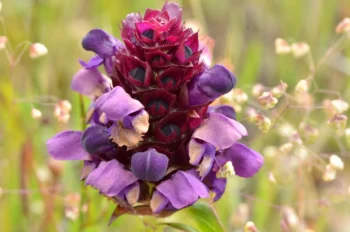
Common Selfheal: The Unsung Hero of Low-Maintenance Native Gardens
Meet common selfheal (Prunella vulgaris), a delightful native perennial that’s been quietly doing its thing in North American landscapes for centuries. While it might not win any flashy flower contests, this humble little plant packs a surprising punch when it comes to supporting pollinators and creating effortless ground cover in your garden.
What Exactly Is Common Selfheal?
Common selfheal is a low-growing perennial forb that forms spreading mats through underground runners called stolons. Don’t let the medical-sounding name fool you – while it does have a long history in folk medicine, we’re here to talk about its garden merits! This hardy little plant typically reaches about 1.5 feet in height and spreads slowly but surely to create a living carpet.
Where Does It Call Home?
Here’s where common selfheal really shines – it’s practically everywhere! This native species has an impressive range, naturally occurring from Alaska down through all the lower 48 states, and extending into Canada from Alberta to Newfoundland. You’ll find it thriving in states as diverse as California, Florida, Maine, and Texas. It’s also been introduced to Hawaii, where it’s naturalized successfully.
- Species observed
- No observations
Why Your Garden (and Local Pollinators) Will Love It
Common selfheal may be modest in stature, but it’s mighty in purpose. Those small purple flower spikes that appear in mid-summer are absolute magnets for bees, butterflies, and other small pollinators. The flowers are arranged in dense, cylindrical clusters that make it easy for insects to access the nectar and pollen they need.
From a design perspective, this plant excels as:
- Ground cover in naturalized areas
- Filler in meadow gardens
- Erosion control on gentle slopes
- Low-maintenance lawn alternative in informal areas
- Addition to cottage-style gardens
Growing Conditions: The Easy-Going Native
One of common selfheal’s best qualities is its adaptability. This plant is the definition of goes with the flow when it comes to growing conditions:
- Soil: Happily grows in coarse, medium, or fine-textured soils
- Moisture: Moderate water needs – not too wet, not too dry
- Light: Tolerates anything from full sun to partial shade
- pH: Comfortable in a range from 5.4 to 8.0
- Hardiness: Thrives in USDA zones 3-9
Wetland Flexibility
Common selfheal shows remarkable adaptability to moisture conditions across different regions. In most areas, it’s considered facultative, meaning it can thrive in both wetland and upland conditions. In some regions like the Arid West and parts of the Eastern Mountains, it leans toward drier sites but can still handle occasional wet conditions.
Planting and Care Tips
Growing common selfheal is refreshingly straightforward:
- Starting from seed: This is the most common propagation method. Seeds are readily available and germinate well without cold stratification
- When to plant: Spring planting works best, after your last frost date
- Spacing: Allow room for spreading – this plant will gradually fill in gaps
- Maintenance: Very low maintenance once established. The plant has a rapid growth rate initially, then settles into steady, slow spreading
- Self-seeding: It will self-seed moderately, helping to naturalize your planting
Seasonal Interest and Growth Habits
Common selfheal is active during spring and summer, producing its attractive gray-green foliage and those charming purple flower spikes. The plant has a decumbent (low and spreading) growth habit, with stems that trail along the ground and root at nodes. While it’s not particularly showy in fall, it provides steady ground cover throughout the growing season.
Should You Plant Common Selfheal?
If you’re looking for a native plant that’s virtually foolproof, supports local ecosystems, and requires minimal fussing, common selfheal deserves a spot in your garden. It’s perfect for those areas where you want something attractive but don’t want to spend time on intensive maintenance.
Consider common selfheal if you:
- Want to support native pollinators
- Need ground cover for naturalized areas
- Have challenging spots with variable moisture or light
- Prefer low-maintenance native plants
- Are creating a meadow or prairie-style garden
While common selfheal might not be the star of your garden show, it’s definitely the reliable supporting actor that makes everything else look better – and keeps the local bee population happy while doing it!