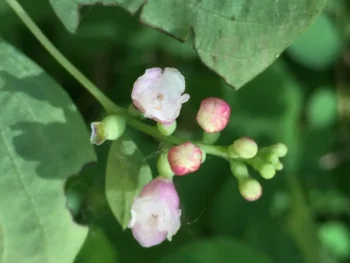
Common Snowberry: The Perfect Native Shrub for Low-Maintenance Gardens
If you’re looking for a native shrub that practically takes care of itself while providing year-round interest, meet the common snowberry (Symphoricarpos albus var. laevigatus). This unassuming but incredibly useful plant might just become your new favorite garden companion.
What is Common Snowberry?
Common snowberry is a deciduous perennial shrub that’s as tough as it is charming. This multi-stemmed woody plant typically reaches 3-6 feet in height and can spread 4-8 feet wide, making it perfect for filling in those tricky spots in your landscape. Don’t let its modest appearance fool you – this native gem packs a punch when it comes to garden benefits.
A True North American Native
Here’s something to get excited about: common snowberry is native across an impressively wide range, including Alaska, Canada, and much of the lower 48 states. You’ll find this adaptable shrub growing naturally from British Columbia all the way to Nova Scotia, and from Washington state down to Colorado and across to the Atlantic coast, including states like California, Idaho, Montana, Michigan, New York, Virginia, and many others.
- Species observed
- No observations
Why Your Garden (and Local Wildlife) Will Love It
Common snowberry isn’t just another pretty face in the garden – it’s a wildlife magnet. The delicate pink-white flowers that bloom in late spring and early summer are beloved by bees, butterflies, and other pollinators. But the real showstopper comes in fall when clusters of bright white berries appear, providing crucial food for birds throughout winter.
From a design perspective, this shrub is wonderfully versatile. Its fine-textured foliage and graceful arching branches create a soft, naturalistic look that works beautifully in:
- Woodland gardens and natural areas
- Wildlife and pollinator gardens
- Native plant landscapes
- Erosion control on slopes
- Low-maintenance foundation plantings
- Mixed shrub borders
Growing Conditions: Surprisingly Easy-Going
One of the best things about common snowberry is how adaptable it is. This shrub thrives in USDA hardiness zones 2-7, which means it can handle everything from frigid northern winters to more moderate climates.
When it comes to growing conditions, common snowberry is refreshingly flexible:
- Light: Partial shade to full sun (though it’s more tolerant of shade than many shrubs)
- Soil: Adapts to various soil types, from sandy to clay
- Water: Drought tolerant once established, but appreciates occasional watering during dry spells
- pH: Tolerates a wide range of soil pH levels
Planting and Care Tips
Getting common snowberry established in your garden couldn’t be easier. Plant in spring or fall, giving each shrub about 4-6 feet of space to accommodate its mature spread. Dig a hole twice as wide as the root ball and just as deep.
Once planted, this low-maintenance shrub pretty much takes care of itself. Here are a few simple care tips:
- Water regularly the first year to establish roots, then only during extended dry periods
- Apply a 2-3 inch layer of organic mulch around the base
- Prune in late winter if needed to control size or remove dead wood
- Be aware that it can spread via underground rhizomes – great for naturalizing, but keep an eye on it in formal gardens
The Bottom Line
Common snowberry proves that native plants don’t have to be high-maintenance to be beautiful and beneficial. With its pollinator-friendly flowers, wildlife-supporting berries, and incredibly adaptable nature, this shrub is perfect for gardeners who want maximum impact with minimal fuss. Whether you’re creating a wildlife habitat, establishing a native plant garden, or just looking for a reliable, good-looking shrub that won’t demand constant attention, common snowberry delivers on all fronts.
Plus, there’s something deeply satisfying about growing a plant that’s been thriving in North American landscapes for thousands of years. Your local birds, bees, and butterflies will thank you – and your garden will look naturally beautiful with virtually no effort on your part.