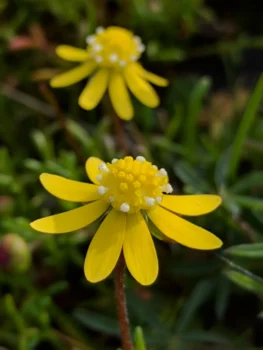
Common Stickyseed: A Tiny Treasure for Wetland Gardens
If you’ve ever wondered what those cheerful little yellow flowers are that pop up in California’s seasonal wetlands each spring, you might be looking at common stickyseed (Blennosperma nanum). This diminutive native annual is one of those plants that proves good things really do come in small packages—especially if you’re passionate about creating authentic native plant habitats in your garden.
What is Common Stickyseed?
Common stickyseed is a petite annual herb that’s perfectly adapted to California’s unique Mediterranean climate. As a native plant species found exclusively in California, it’s evolved to thrive in the state’s seasonal wetlands and vernal pools—those magical temporary ponds that fill with winter rains and dry up by summer.
True to its name, this little plant produces seeds that tend to stick to things (hence stickyseed), which helps it spread naturally in the wild. The common part of its name might be a bit misleading though—while it’s the most widespread member of its genus, it’s still a fairly specialized plant that most gardeners have never encountered.
- Species observed
- No observations
Why Grow Common Stickyseed?
You might be wondering why anyone would want to grow such an obscure little plant. Here are some compelling reasons:
- Authentic native habitat: If you’re creating a true California native garden or restoring seasonal wetland areas, common stickyseed is an essential component
- Pollinator support: Despite its small size, the bright yellow daisy-like flowers attract native bees and beneficial flies during its spring blooming period
- Low maintenance: Once established in the right conditions, this annual basically takes care of itself
- Educational value: It’s a fascinating example of how plants adapt to seasonal moisture patterns
The Seasonal Wetland Specialist
Here’s where common stickyseed gets really interesting—it’s what botanists call a facultative wetland plant. This means it usually grows in wetlands but can occasionally pop up in non-wetland areas too. In the wild, you’ll find it in vernal pools, seasonal swales, and other areas that flood in winter and spring but dry out completely in summer.
This unique lifestyle makes common stickyseed perfect for rain gardens, seasonal bioswales, or any garden area that experiences wet winters and dry summers. It’s particularly well-suited for USDA hardiness zones 8-10, where California’s Mediterranean climate patterns naturally occur.
Growing Conditions and Care
If you’re thinking about adding common stickyseed to your garden, you’ll need to understand its very specific needs:
- Moisture: Needs consistent moisture from fall through spring, then complete drying in summer
- Soil: Prefers clay or clay-loam soils that can hold water during the wet season
- Sun exposure: Full sun to partial shade
- Timing: Seeds naturally germinate with fall rains and bloom in early spring
Planting and Establishment Tips
Growing common stickyseed successfully is all about mimicking its natural habitat:
- Direct seeding is best: Scatter seeds in fall before the first rains arrive
- Create the right conditions: Choose a spot that will stay moist (but not waterlogged) through winter and spring
- Let it go dormant: Allow the area to dry out completely in summer—this is crucial for the plant’s lifecycle
- Be patient: As an annual, you’ll need to let it self-seed to maintain a population
Is Common Stickyseed Right for Your Garden?
This little native isn’t for everyone. It’s best suited for gardeners who:
- Are specifically interested in native plant gardening or habitat restoration
- Have areas that naturally stay wet in winter and dry in summer
- Don’t mind a plant that disappears completely for part of the year
- Want to support native pollinators and create authentic California ecosystems
If you’re looking for a showy border plant or year-round garden presence, common stickyseed probably isn’t your best choice. But if you’re passionate about native plants and have the right growing conditions, this little gem can add authentic charm and ecological value to your seasonal wetland garden.
Remember, successful native gardening is about working with your local ecosystem rather than against it. Common stickyseed is a perfect example of a plant that thrives when you let it follow its natural rhythms—wet winters, dry summers, and all.