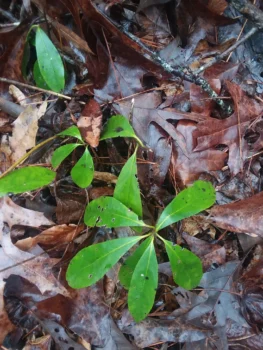
Common Sweetleaf: A Native Shrub That’s Sweet on Wildlife (But Maybe Not Your Garden)
If you’re on the hunt for a native shrub that’ll make the local wildlife happy, meet the common sweetleaf (Symplocos tinctoria). This unassuming little character might not win any beauty contests, but it’s got some interesting tricks up its sleeve – and a few quirks that might make you think twice before giving it prime real estate in your garden.
What Exactly Is Common Sweetleaf?
Common sweetleaf is a native perennial shrub that calls the southeastern United States home. You’ll find this woody plant growing naturally from Delaware down to Florida and as far west as Texas, covering states like Alabama, Arkansas, Georgia, Louisiana, Maryland, Mississippi, North Carolina, South Carolina, Tennessee, Virginia, and even popping up in New York and Oklahoma.
This multi-stemmed shrub typically stays under 20 feet tall (though it can occasionally reach 40 feet under perfect conditions), making it a solid choice for understory plantings. It’s got a rhizomatous growth form, which means it spreads underground – something to keep in mind if you like your plants to stay put!
- Species observed
- No observations
The Good, The Bad, and The Yellow
Let’s start with what common sweetleaf does well. In late spring, it produces small yellow flowers that are actually quite conspicuous and attract bees and other pollinators. The foliage is a pleasant yellow-green with a medium texture, and come fall, those leaves turn a lovely yellow before dropping.
Here’s where things get interesting (or concerning, depending on your perspective): this shrub has a moderate growth rate and a relatively short lifespan. It’s also quite the wanderer, thanks to those spreading rhizomes, so it might show up in places you didn’t invite it to.
Wildlife Benefits: The Sweet Spot
Here’s where common sweetleaf really shines – wildlife absolutely love it. Large animals get about 5-10% of their diet from this plant, though they don’t typically use it for cover. If you’re trying to create a wildlife-friendly landscape, this shrub definitely pulls its weight in the food department.
Growing Conditions: Picky But Predictable
Common sweetleaf has some specific preferences that you’ll need to respect:
- Soil: Likes coarse to medium-textured soils but turns its nose up at fine-textured ones
- pH: Prefers acidic conditions between 4.5-6.5
- Water: Needs consistent moisture (40-100 inches annually) and has no drought tolerance
- Light: Shade tolerant, making it perfect for woodland settings
- Temperature: Hardy to about -22°F, suitable for USDA zones 6-9
- Wetlands: Facultative across all regions, meaning it’s happy in both wet and dry sites
Should You Plant It?
Common sweetleaf is a bit of a mixed bag. On the plus side, it’s a legitimate native that supports wildlife and tolerates shade beautifully. It’s perfect for naturalizing large woodland areas or creating wildlife habitat.
On the flip side, it’s not exactly a showstopper aesthetically, has a short lifespan, and tends to spread where it wants to go. The propagation data suggests it might be tricky to establish from typical nursery methods, which could make finding and growing it challenging.
Best Uses in the Landscape
Common sweetleaf works best in:
- Naturalized woodland gardens
- Wildlife habitat restoration projects
- Large-scale native plant installations
- Areas where you want to attract and feed wildlife
- Shady spots where other shrubs struggle
Planting and Care Tips
If you decide to give common sweetleaf a try:
- Plant in spring for best establishment
- Ensure your soil is acidic and well-draining but not too fine
- Provide consistent moisture, especially during establishment
- Give it room to spread – remember those wandering rhizomes
- Be patient with establishment, as propagation can be challenging
- Consider it for areas where you want low-maintenance native coverage
The Bottom Line
Common sweetleaf is one of those plants that’s better appreciated for its ecological role than its garden glamour. If you’ve got a large, naturalized area and want to support local wildlife, it could be a great addition. But if you’re looking for a well-behaved, gorgeous shrub for your carefully curated garden beds, you might want to keep shopping.
Sometimes the best native plants are the ones that do their job quietly in the background – and common sweetleaf is definitely one of those humble heroes of the plant world.