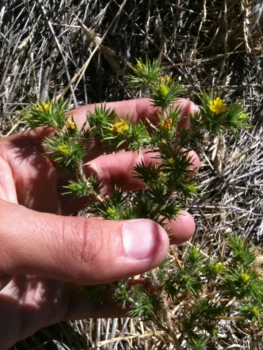
Common Tarweed: A Hardy Native Annual for Water-Wise Gardens
If you’re looking to add some authentic Western charm to your garden while supporting local wildlife, common tarweed (Centromadia pungens) might just be the unsung hero you’ve been searching for. This scrappy little native annual has been quietly thriving across the American West for centuries, and it’s ready to bring its no-fuss attitude to your landscape.
What is Common Tarweed?
Common tarweed is a native annual forb that belongs to the sunflower family. As a forb, it’s an herbaceous plant without woody stems—think of it as the wildflower cousin of your garden’s showier perennials. This hardy little plant completes its entire life cycle in just one growing season, but don’t let that fool you into thinking it’s delicate. Common tarweed is as tough as they come.
Where Does Common Tarweed Call Home?
This resilient native has quite an impressive range across the lower 48 states. You’ll find common tarweed growing naturally in Arizona, California, Idaho, Nevada, New York, Oregon, and Washington. It’s particularly well-adapted to the dry conditions of the American West, though its presence in New York shows it can handle different regional climates too.
- Species observed
- No observations
Why Consider Common Tarweed for Your Garden?
Here’s where common tarweed really shines—it’s practically maintenance-free once established. If you’re tired of babying high-maintenance plants or dealing with sky-high water bills, this native annual could be your new best friend.
The benefits include:
- Excellent drought tolerance after establishment
- Supports native pollinators with its cheerful yellow flowers
- Requires minimal care and attention
- Self-seeds readily for continued presence in your garden
- Authentic to Western landscapes
What to Expect: Size and Appearance
Common tarweed produces small, bright yellow composite flowers that bloom in clusters. The plant has an aromatic quality—some might call it pungent (hence the species name pungens)—that gives it character. While it may not win any beauty contests against showier garden favorites, it has a natural, wildflower charm that works beautifully in the right setting.
Perfect Garden Settings
Common tarweed isn’t meant for formal flower beds or manicured landscapes. Instead, it thrives in:
- Wildflower meadows and naturalized areas
- Native plant gardens
- Water-wise xeriscapes
- Restoration projects
- Informal, cottage-style gardens
Growing Conditions and Care
The beauty of common tarweed lies in its simplicity. This plant prefers full sun and well-drained soils—the drier, the better. It’s particularly well-suited to USDA hardiness zones 8-10, where it can take advantage of Mediterranean-type climates with wet winters and dry summers.
Here’s what common tarweed needs to thrive:
- Full sun exposure
- Well-drained, even poor soils
- Minimal water once established
- Space to self-seed for future generations
Planting and Care Tips
Getting common tarweed established is refreshingly straightforward. Direct seed in fall or early spring when soil temperatures are cool. The seeds are small, so scatter them over prepared soil and barely cover them—they need light to germinate.
Once your tarweed is up and growing, step back and let it do its thing. Water lightly during establishment, but once the plants are settled, they’ll prefer to stay on the dry side. Over-watering can actually weaken these drought-adapted natives.
Understanding Wetland Preferences
Interestingly, common tarweed has different wetland preferences depending on where it’s growing. In the Arid West and Northcentral & Northeast regions, it’s considered facultative, meaning it can grow in both wet and dry conditions. However, in the Western Mountains, Valleys, and Coast region, it’s classified as obligate upland, preferring drier sites and rarely occurring in wetlands.
Supporting Local Wildlife
While common tarweed might look humble, it punches above its weight when it comes to supporting local ecosystems. Its bright yellow flowers attract native bees, butterflies, and other pollinators throughout its blooming season. As a native species, it has co-evolved with local wildlife and provides food and habitat that non-native plants simply can’t match.
Is Common Tarweed Right for Your Garden?
Common tarweed is perfect for gardeners who want to embrace native plants while reducing maintenance and water use. It’s ideal if you’re creating habitat for local wildlife, establishing a wildflower meadow, or simply want a plant that can thrive with minimal intervention.
However, this might not be the plant for you if you prefer formal gardens, need plants for shady locations, or want something that stays exactly where you plant it (remember, it self-seeds enthusiastically).
Consider common tarweed as nature’s own low-maintenance solution for sunny, dry spots in your landscape. It may not demand attention with flashy blooms, but it will quietly support your local ecosystem while asking for very little in return—and sometimes, that’s exactly what a garden needs.