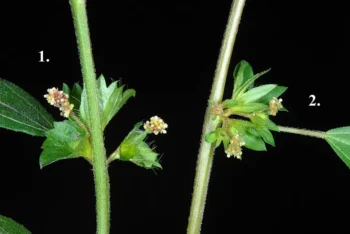
Common Threeseed Mercury: A Humble Native with Hidden Garden Value
If you’re looking for a flashy showstopper to anchor your flower beds, common threeseed mercury (Acalypha rhomboidea) probably isn’t your plant. But if you’re interested in supporting local ecosystems while adding a quiet, understated presence to your garden, this modest native annual deserves a second look.
What Is Common Threeseed Mercury?
Common threeseed mercury is a native North American annual forb—basically a soft-stemmed plant that completes its entire life cycle in one growing season. Don’t let the mercury in its name worry you; it has nothing to do with the heavy metal. The name likely comes from an old association with the Roman god Mercury, reflecting the plant’s quick-growing nature.
This unassuming plant belongs to the spurge family and typically grows as a low, spreading herb with heart-shaped leaves. Its flowers are tiny and greenish, designed more for function than beauty—they’re wind-pollinated, so they don’t need showy petals to attract insects.
Where Does It Grow Naturally?
Common threeseed mercury is native to both Canada and the lower 48 United States, with an impressively wide distribution. You can find it growing naturally from the Atlantic provinces of Canada down to Florida and Texas, and from the East Coast all the way to the Great Plains. It thrives in states including Alabama, Arkansas, Connecticut, Delaware, Florida, Georgia, Illinois, Indiana, Iowa, Kansas, Kentucky, Louisiana, Maine, Maryland, Massachusetts, Michigan, Minnesota, Mississippi, Missouri, Nebraska, New Hampshire, New Jersey, New York, North Carolina, North Dakota, Ohio, Oklahoma, Pennsylvania, Rhode Island, South Carolina, South Dakota, Tennessee, Texas, Vermont, Virginia, West Virginia, and Wisconsin, plus the District of Columbia and Canadian provinces of New Brunswick, Nova Scotia, Ontario, and Quebec.
- Species observed
- No observations
Should You Plant Common Threeseed Mercury?
Here’s where we get real: common threeseed mercury isn’t going to win any beauty contests. But there are some compelling reasons why you might want to welcome it into your garden:
- It’s truly native – Supporting local ecosystems starts with local plants
- Extremely adaptable – Grows in various conditions from wetlands to uplands
- Low maintenance – Once established, it pretty much takes care of itself
- Self-seeding – Will naturalize in appropriate areas without becoming invasive
- Wildlife value – Provides food for various insects and small creatures
On the flip side, if you’re looking for ornamental value, this probably isn’t your plant. It’s more suited for naturalized areas, woodland gardens, or spaces where you want authentic native plant communities rather than manicured displays.
Growing Conditions and Care
One of common threeseed mercury’s best qualities is its adaptability. Its wetland status varies by region—from facultative (equally at home in wet or dry conditions) in coastal areas to facultative upland (preferring drier spots but tolerating moisture) in most other regions. This flexibility makes it surprisingly easy to grow.
For best results, provide:
- Light: Partial shade to full sun
- Soil: Adaptable to various soil types, from sandy to clay
- Water: Moderate moisture, but tolerates both wet and dry conditions
- Hardiness zones: 3-9 (as an annual, it’s more about growing season length than winter hardiness)
Planting and Maintenance Tips
Since common threeseed mercury is an annual, you’ll either need to replant each year or let it self-seed. The good news? It’s excellent at self-seeding, so once you get it established, it tends to stick around.
- Start seeds in early spring after the last frost
- Scatter seeds directly where you want them to grow
- Barely cover seeds with soil—they need light to germinate
- Water gently until established
- Allow some plants to go to seed if you want it to return next year
Maintenance is minimal. You might want to thin seedlings if they become too dense, but otherwise, this plant is remarkably self-sufficient.
Garden Design Ideas
Common threeseed mercury works best in:
- Native plant gardens where authenticity matters more than showiness
- Woodland understory as a natural ground cover
- Rain gardens thanks to its moisture tolerance
- Naturalized areas where you want a wild look
- Wildlife gardens focused on supporting local ecosystems
The Bottom Line
Common threeseed mercury won’t make your neighbors stop and stare, but it might make local wildlife stop and snack. If you’re building a garden that prioritizes ecological function over ornamental flash, this humble native annual deserves consideration. It’s the kind of plant that quietly does its job—supporting local food webs, adapting to various conditions, and asking for almost nothing in return.
For gardeners focused purely on aesthetics, you might want to look elsewhere. But for those interested in authentic native plant communities or low-maintenance naturalized spaces, common threeseed mercury offers genuine value in its understated way.