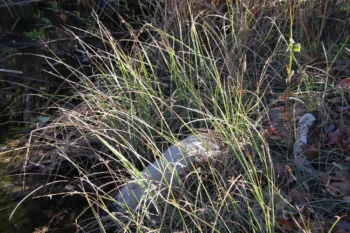
Common Threesquare: A Native Sedge for Water-Loving Gardens
If you’ve been searching for a native plant that thrives in those soggy spots where other plants fear to tread, meet common threesquare (Schoenoplectus pungens var. longispicatus). This unassuming but incredibly useful perennial sedge might not win any beauty contests, but it’s a champion when it comes to solving wet soil problems while supporting local ecosystems.
What Exactly Is Common Threesquare?
Common threesquare is a native North American sedge that belongs to the graminoid family – think grass-like plants that include sedges, rushes, and true grasses. Don’t let the grass-like description fool you though; this is a sedge through and through, with the characteristic triangular stems that give it part of its common name. The threesquare refers to these distinctive three-sided stems, which you can feel by rolling them between your fingers.
This perennial plant is also known by several scientific synonyms, including Scirpus americanus var. longispicatus and Scirpus pungens var. longispicatus, so don’t be confused if you see these names in older gardening references.
Where Common Threesquare Calls Home
As a true native, common threesquare has an impressive range across North America. You’ll find this adaptable sedge naturally occurring from coast to coast, including Alberta, British Columbia, Saskatchewan in Canada, and throughout much of the United States from Arizona and California in the west to Illinois and Louisiana in the east, and from North Dakota down to Texas.
- Species observed
- No observations
Why You Might Want Common Threesquare in Your Garden
While common threesquare won’t stop traffic with showy flowers, it brings several valuable qualities to the right garden setting:
- Problem solver: Perfect for those challenging wet areas where other plants struggle or fail
- Low maintenance: Once established, it requires minimal care and naturally adapts to water level fluctuations
- Ecosystem support: Provides structure and habitat for beneficial insects and small wildlife
- Erosion control: The root system helps stabilize soil around water features
- Year-round interest: While subtle, the triangular stems provide texture even in winter
Perfect Garden Situations for Common Threesquare
This sedge truly shines in specific garden scenarios:
- Rain gardens: Excellent for managing stormwater runoff
- Pond and water feature edges: Creates natural-looking transitions
- Bog gardens: Thrives in consistently wet conditions
- Native plant gardens: Adds authentic local flora
- Restoration projects: Ideal for wetland and prairie restoration efforts
Growing Conditions and Care
Common threesquare is refreshingly straightforward to grow, provided you can meet its primary need: consistent moisture. Here’s what this sedge requires:
Moisture: This plant demands wet to saturated soils. Think bog-like conditions or areas that stay consistently moist. It won’t tolerate drought conditions.
Light: Performs best in full sun but can handle partial shade, especially in hotter climates.
Soil: Adaptable to various soil types as long as they stay wet. Clay, loam, or even sandy soils work fine.
Hardiness: Suitable for USDA zones 3-9, making it adaptable across much of North America.
Planting and Establishment Tips
Getting common threesquare established is relatively simple:
- Timing: Plant in spring or early fall when temperatures are moderate
- Spacing: Allow 12-18 inches between plants for natural clump formation
- Initial care: Keep soil consistently saturated during establishment
- Patience: Like many native sedges, it may take a season or two to fully establish
Is Common Threesquare Right for Your Garden?
Consider common threesquare if you have consistently wet areas that need plant coverage, want to create wildlife habitat, or are working on native plant or restoration projects. However, this plant isn’t suitable for typical garden beds or areas with average moisture levels.
While it may not have the flashy appeal of popular garden perennials, common threesquare serves an important niche in water-focused landscapes. Its quiet presence and reliable performance make it a valuable addition to any gardener’s toolkit for challenging wet sites.
Remember, successful gardening often means choosing the right plant for the right place – and for those soggy spots, common threesquare might be exactly what you’ve been looking for.