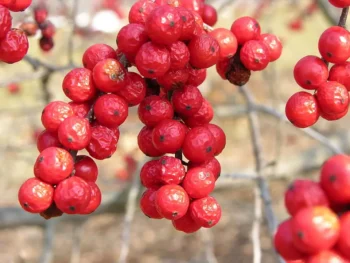
Common Winterberry: The Native Shrub That Lights Up Your Winter Garden
If you’ve ever wondered how to add stunning color to your winter landscape while supporting local wildlife, common winterberry (Ilex verticillata) might just be your new favorite native shrub. This deciduous holly brings drama to the dreariest months with its brilliant red berries that seem to glow against the winter sky.
What Makes Common Winterberry Special?
Common winterberry is a true North American native, naturally occurring across a vast range from Canada down to Florida and from the Atlantic coast west to Minnesota and Texas. This perennial shrub belongs to the holly family, though unlike its evergreen cousins, it drops its leaves each fall to reveal clusters of vibrant red berries adorning bare branches.
The plant grows throughout these states and provinces: Alabama, Arkansas, Connecticut, Delaware, District of Columbia, Florida, Georgia, Illinois, Indiana, Iowa, Kentucky, Louisiana, Maine, Maryland, Massachusetts, Michigan, Minnesota, Mississippi, Missouri, New Brunswick, New Hampshire, New Jersey, New York, North Carolina, Nova Scotia, Ohio, Ontario, Pennsylvania, Prince Edward Island, Quebec, Rhode Island, South Carolina, Tennessee, Texas, Vermont, Virginia, West Virginia, Wisconsin, and Newfoundland.
- Species observed
- No observations
Note for Arkansas gardeners: Common winterberry has a rarity status of S2 in your state, so if you’re planning to include it in your landscape, please source plants from reputable nurseries rather than wild collection.
Garden Appeal and Landscape Role
This shrub truly shines as a multiseasonal performer. In late spring, it produces small, inconspicuous white flowers that attract bees and other pollinators. The real show begins in fall when female plants (yes, you’ll need both male and female plants for berry production!) develop those famous bright red berries that persist well into winter.
Common winterberry fits beautifully into several garden styles:
- Native plant gardens
- Wildlife and bird gardens
- Rain gardens and wetland plantings
- Winter interest gardens
- Naturalized woodland edges
Size and Growth Expectations
This moderate-growing shrub typically reaches 6-10 feet tall and wide at maturity, making it perfect for medium to large landscapes. With its multiple-stem growth form and dense summer foliage, it creates excellent screening while maintaining a naturally informal appearance. The growth rate is steady but not aggressive, so you won’t find yourself constantly pruning to keep it in bounds.
Growing Conditions and Care
Here’s where common winterberry really proves its worth – it thrives in conditions many other shrubs find challenging. As a facultative wetland plant, it absolutely loves moisture and can handle wet soils that would drown other plants. This makes it perfect for:
- Rain gardens and bioswales
- Areas with poor drainage
- Pond edges and stream banks
- Low-lying areas that stay moist
The plant prefers acidic to neutral soils (pH 4.5-7.5) and adapts well to both fine and medium-textured soils. While it can tolerate some shade, you’ll get the best berry production in partial to full sun locations.
USDA Hardiness Zones
Common winterberry is remarkably cold-hardy, thriving in USDA zones 3-9. It can withstand temperatures as low as -28°F, making it suitable for northern gardens while also tolerating the heat and humidity of southern regions.
Planting and Care Tips
Success with common winterberry starts with understanding its needs:
- Plant both sexes: You’ll need at least one male plant for every 3-6 female plants to ensure good berry production
- Choose the right spot: Moist, acidic soil in partial to full sun works best
- Space appropriately: Plant 4-6 feet apart for a natural hedge effect
- Mulch well: Keep roots cool and moist with organic mulch
- Be patient: Seeds require cold stratification, and young plants may take a few years to establish fully
The good news? Once established, common winterberry is relatively low-maintenance. It has moderate drought tolerance but performs best with consistent moisture. Pruning is minimal – just remove any dead or damaged wood in late winter.
Wildlife and Ecological Benefits
This native shrub is a wildlife magnet. The late spring flowers provide nectar for native bees and other pollinators during their active season. But the real wildlife value comes from those gorgeous berries, which serve as crucial winter food for numerous bird species when other food sources are scarce.
The dense branching structure also provides nesting sites and shelter for birds, while the plant supports various native insects throughout the growing season, creating a complete ecosystem in your backyard.
Should You Plant Common Winterberry?
Absolutely! If you have a spot that stays reasonably moist and you want to support local wildlife while adding spectacular winter interest to your landscape, common winterberry is an excellent choice. It’s readily available from nurseries, relatively easy to grow, and provides benefits that extend far beyond your property line.
Just remember to plant both male and female specimens, be patient as they establish, and enjoy watching the birds flock to your garden when winter arrives. Your landscape – and local ecosystem – will thank you for choosing this beautiful native shrub.