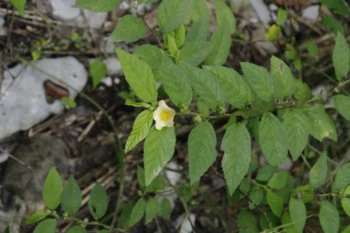
Common Wireweed: A Hardy Perennial with a Complex Story
If you’ve ever wondered about that small, persistent plant with cheerful yellow flowers popping up in disturbed soils, you might be looking at common wireweed (Sida acuta). This perennial forb has quite the tale to tell – it’s both beloved and bewildering, depending on where you garden and what you’re trying to achieve in your landscape.
What Exactly Is Common Wireweed?
Common wireweed is a perennial herb that belongs to the mallow family. Unlike woody shrubs or trees, this plant lacks significant woody tissue and instead produces soft, herbaceous growth year after year. It’s characterized by its small, heart-shaped leaves and bright yellow, five-petaled flowers that seem to bloom almost continuously in favorable conditions.
You might also encounter this plant under its scientific name, Sida acuta, or its various synonyms including Sida carpinifolia. The wireweed part of its common name likely refers to its somewhat wiry, tough stems that can persist even in challenging growing conditions.
Where Does It Call Home?
Here’s where things get interesting with common wireweed – its native status is complicated. This plant is native to several U.S. states including Alabama, Florida, Georgia, Louisiana, Mississippi, New Jersey, Pennsylvania, South Carolina, and Texas. It’s also native to Puerto Rico, the U.S. Virgin Islands, and Navassa Island.
However, in Hawaii, Guam, Palau, and other Pacific Basin locations, common wireweed is considered non-native, having been introduced and now reproducing on its own in the wild.
- Species observed
- No observations
Should You Plant Common Wireweed?
The answer depends largely on where you garden and what you’re hoping to achieve:
Reasons You Might Want It:
- Low maintenance once established
- Attracts bees and other small pollinators with its bright yellow blooms
- Drought tolerant and adaptable to various soil conditions
- Native plant option in much of the southeastern and some mid-Atlantic states
- Thrives in USDA hardiness zones 8-11
Reasons for Caution:
- Can spread readily and may become weedy in some situations
- Not suitable for formal garden designs
- May require management to prevent overly aggressive spreading
- Non-native in Hawaii and Pacific regions
Growing Conditions and Care
If you decide common wireweed fits your gardening goals, you’ll find it refreshingly undemanding:
Light: Prefers full sun but tolerates partial shade
Soil: Adaptable to various soil types, but requires good drainage
Water: Drought tolerant once established, though regular water encourages more blooms
Wetland Tolerance: Generally prefers upland conditions and rarely occurs in wetlands (except in Hawaii where it can tolerate wetter conditions)
Landscape Role and Design Ideas
Common wireweed works best in informal, naturalized settings rather than manicured garden beds. Consider it for:
- Naturalized meadow areas
- Pollinator gardens (informal sections)
- Ground cover in low-maintenance landscapes
- Restoration projects in its native range
A Word About Alternatives
If you’re gardening in Hawaii or other Pacific locations where common wireweed isn’t native, consider exploring indigenous alternatives that provide similar benefits. Native plants are always the most ecological choice for supporting local wildlife and maintaining regional biodiversity.
The Bottom Line
Common wireweed is one of those plants that proves gardening isn’t always black and white. In its native range, it can be a valuable, low-maintenance addition to informal landscapes, supporting local pollinators and requiring minimal care. However, its spreading nature means it’s not for every garden or every gardener.
Before planting, consider your gardening style, local ecosystem, and how much management you’re willing to do. Sometimes the most interesting plants are the ones that make us think a little harder about our gardening choices – and common wireweed certainly fits that description!