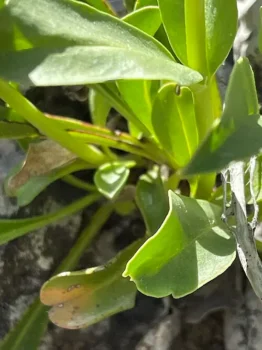
Compact Penstemon: A Rare Mountain Gem Worth Protecting
If you’re drawn to rare alpine beauties and have a knack for growing challenging natives, compact penstemon might just capture your gardening heart. This little-known wildflower is as exclusive as it gets – found only in the mountains of Utah and southern Idaho, and unfortunately becoming increasingly rare in the wild.
What Makes Compact Penstemon Special?
Compact penstemon (Penstemon compactus) is a perennial wildflower that stays true to its name with a low, dense growth habit. Unlike its taller penstemon cousins, this species forms neat clumps that rarely exceed 8-12 inches in height. During late spring and early summer, it produces stunning clusters of tubular flowers in shades ranging from deep blue to rich purple – a true showstopper for those lucky enough to see it in bloom.
Where Does It Call Home?
This penstemon is what botanists call an endemic species, meaning it’s found nowhere else on Earth except for specific mountain ranges in Utah and southern Idaho. You’ll find it clinging to rocky slopes and alpine meadows in the Wasatch Mountains and Bear River Range, typically at elevations between 6,000 and 9,000 feet.
- Species observed
- No observations
A Word of Caution: This Plant Needs Our Help
Before you start dreaming of adding compact penstemon to your garden, there’s something important you need to know. This species has a Global Conservation Status of S2, which means it’s imperiled in the wild. With only 6 to 20 known populations and fewer than 3,000 individual plants remaining, every compact penstemon is precious.
If you’re determined to grow this rare beauty, please only purchase plants or seeds from reputable native plant nurseries that use responsibly sourced, legally collected material. Never collect from wild populations – it could push this species closer to extinction.
Is Compact Penstemon Right for Your Garden?
Let’s be honest – this isn’t a plant for everyone. Compact penstemon has very specific requirements that can be challenging to replicate in typical garden settings. It’s perfect for:
- Dedicated rock gardens with excellent drainage
- Alpine plant collections
- Xeriscaping projects in appropriate climates
- Conservation-minded gardeners willing to provide specialized care
However, if you’re looking for an easy-care native or live in a humid climate, you might want to consider other penstemon species that are more adaptable and less threatened.
Growing Conditions and Care
Compact penstemon is adapted to harsh mountain conditions, which means it needs:
- Excellent drainage: Think rocky, gravelly soil that never stays soggy
- Full sun: At least 6-8 hours of direct sunlight daily
- Alkaline soil: pH between 7.0-8.5 works best
- Cold winters: Hardy in USDA zones 4-7, needs winter chill
- Minimal water: Drought-tolerant once established, overwatering is deadly
Planting and Care Tips
If you’ve sourced your compact penstemon responsibly and have the right growing conditions, here’s how to give it the best chance:
- Plant in spring after the last frost
- Create a raised bed or mound to ensure perfect drainage
- Mix in plenty of coarse sand and gravel to mimic its native habitat
- Water sparingly – only during extended dry periods in the first year
- Avoid fertilizing, as rich soils can actually harm the plant
- Mulch with gravel rather than organic materials
Wildlife Benefits
When compact penstemon blooms, it’s like ringing the dinner bell for native pollinators. Its tubular flowers are perfectly designed for long-tongued bees and provide an important nectar source in high-elevation ecosystems. Hummingbirds also appreciate the flowers’ shape and rich nectar.
The Bottom Line
Compact penstemon is undeniably beautiful and ecologically valuable, but it’s not a casual garden choice. This rare native requires specialized growing conditions and responsible sourcing. If you’re up for the challenge and committed to conservation, it can be a meaningful addition to an appropriate garden setting. However, if you’re new to native gardening or looking for something more forgiving, consider starting with other penstemon species like firecracker penstemon or beardtongue – they’ll give you similar beauty with less fuss and without the conservation concerns.
Remember, sometimes the best way to appreciate a rare plant is to support its conservation in the wild rather than trying to grow it at home.