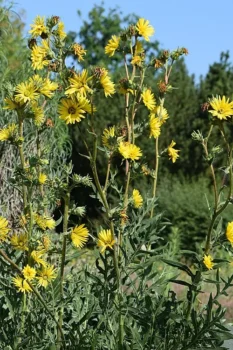
Compassplant: The Prairie Giant That Points You Home
If you’ve ever wondered what it would be like to have a natural compass in your garden, meet the compassplant (Silphium laciniatum). This towering native prairie perennial doesn’t just add dramatic height to your landscape—it’s got a fascinating trick that earned it its memorable name.
What Makes Compassplant Special
The compassplant is a true American native, found naturally across a huge swath of North America from Canada down through the central and eastern United States. You’ll find this impressive forb growing wild in states from Alabama to Wisconsin, and from New York to New Mexico. It’s particularly at home in the Great Plains and prairie regions where it once dominated the landscape.
- Species observed
- No observations
This perennial forb (that’s botanist-speak for a non-woody flowering plant) has earned its place as one of the most recognizable prairie plants, and for good reason. The compassplant can tower anywhere from 6 to 12 feet tall, making it an absolute showstopper in any garden setting.
The Compass Connection
Here’s where things get really interesting: the compassplant’s deeply lobed leaves have a remarkable tendency to orient themselves north-south, with their edges facing east and west. This adaptation helps the plant minimize water loss during the hottest parts of the day. Native Americans and early settlers noticed this reliable orientation and used the plants as natural compasses—hence the name!
Garden Appeal and Design Role
From a design perspective, compassplant is pure drama. Its massive leaves (some reaching 18 inches long) create bold texture at ground level, while bright yellow, sunflower-like blooms crown the tall stems in late summer and early fall. These cheerful flowers measure 3-5 inches across and provide a stunning backdrop for shorter prairie plants.
The compassplant works beautifully in:
- Prairie gardens and native plant landscapes
- Large naturalized areas where it has room to spread
- Pollinator gardens as a late-season nectar source
- Wildlife gardens supporting birds and beneficial insects
- Restoration projects for authentic prairie ecosystems
Pollinator Powerhouse
Late summer can be a tough time for pollinators, but that’s exactly when compassplant shines brightest. Its abundant yellow flowers provide crucial nectar and pollen when many other plants are winding down for the season. Bees, butterflies, and a host of native insects rely on this reliable late-season buffet.
Growing Conditions and Care
The good news about compassplant is that it’s remarkably easy to grow once you understand its needs. This prairie native thrives in USDA hardiness zones 3-8, making it suitable for most of the continental United States.
Ideal growing conditions include:
- Full sun (at least 6-8 hours daily)
- Well-drained soil—it won’t tolerate wet feet
- Average to poor soil fertility (rich soil can actually make it floppy)
- Plenty of space—this plant needs room to spread
Planting and Care Tips
Here’s the secret to compassplant success: patience and space. This plant develops an incredibly deep taproot—sometimes reaching 15 feet down—which makes it virtually drought-proof once established but also means it doesn’t like to be moved.
Planting tips:
- Start with small plants or seeds rather than trying to transplant large specimens
- Give each plant at least 3-4 feet of space in all directions
- Plant in spring after the last frost
- Water regularly the first year, then step back and let nature take over
Ongoing care:
- Minimal care needed once established—this is a low-maintenance superstar
- No fertilizer necessary (and may actually harm the plant)
- Cut back in late fall or early spring
- Divide carefully if needed, though the plant prefers to be left alone
Is Compassplant Right for Your Garden?
Compassplant isn’t for everyone, and that’s perfectly okay. This is definitely a go big or go home kind of plant. If you have a small urban garden or prefer tidy, controlled landscapes, you might want to consider smaller native alternatives.
However, if you have the space and love the idea of supporting native wildlife while adding authentic prairie character to your landscape, compassplant could be your new favorite plant. It’s particularly perfect for anyone interested in ecological gardening, pollinator support, or creating habitat for native species.
Remember, you’re not just planting a flower—you’re establishing a piece of North American prairie heritage that will provide benefits for decades to come. And who knows? Maybe one day you’ll find yourself using your compassplant as an actual compass, just like the pioneers did generations ago.