Cone-Cup Spikerush: A Native Sedge for Wet Gardens
If you’ve been searching for a native plant that thrives in those soggy spots where most garden plants fear to tread, let me introduce you to cone-cup spikerush (Eleocharis tuberculosa). This unassuming little sedge might not win any beauty contests, but it’s a champion when it comes to handling wet conditions and supporting local ecosystems.
What Is Cone-Cup Spikerush?
Cone-cup spikerush is a perennial sedge native to both Canada and the lower 48 United States. As a member of the sedge family (Cyperaceae), it’s one of those grass-like plants that often gets overlooked but plays an important role in wetland ecosystems. Don’t let the scientific name Eleocharis tuberculosa intimidate you – this plant is surprisingly straightforward to work with if you understand its needs.
You might occasionally see this plant listed under some synonyms in older references, including Eleocharis simplex or Scirpus tuberculosa, but cone-cup spikerush is the name that’s stuck.
Where Does It Grow Naturally?
This adaptable sedge has quite an impressive natural range, growing across much of eastern North America. You’ll find it thriving from Nova Scotia down to Florida and as far west as Texas. It pops up in states including Alabama, Arkansas, Connecticut, Delaware, Florida, Georgia, Kentucky, Louisiana, Maine, Maryland, Massachusetts, Mississippi, New Hampshire, New Jersey, New York, North Carolina, Pennsylvania, Rhode Island, South Carolina, Tennessee, Virginia, and the District of Columbia.
- Species observed
- No observations
The Wet Garden Specialist
Here’s where cone-cup spikerush really shines – it’s what botanists call an obligate wetland plant, meaning it almost always occurs in wetlands across all regions where it grows. This designation tells you everything you need to know about its water requirements!
If you have a rain garden, pond margin, or that perpetually soggy area in your yard where other plants struggle, cone-cup spikerush might be your answer. It’s hardy in USDA zones 4-9, making it suitable for most temperate gardens.
What Does It Look Like?
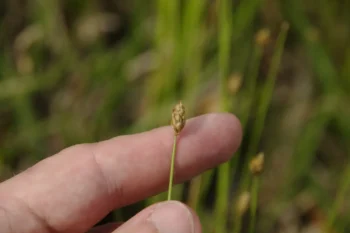
Let’s be honest – cone-cup spikerush won’t be the star of your flower border. This sedge produces slender, green stems topped with small, inconspicuous brown flower spikes. Its appeal lies more in its fine texture and its ability to form colonies that provide ground cover in wet areas. Think of it as the reliable supporting actor rather than the leading role in your garden drama.
Why Grow Cone-Cup Spikerush?
You might be wondering why you’d want to plant something that’s not particularly flashy. Here are some compelling reasons:
- Perfect for problem wet areas where other plants fail
- Supports native wildlife and birds with its seeds
- Requires virtually no maintenance once established
- Helps with erosion control along water features
- Adds fine texture and natural appeal to rain gardens
- Excellent for wetland restoration projects
Growing Cone-Cup Spikerush Successfully
The secret to success with cone-cup spikerush is remembering that it’s a wetland plant through and through. Here’s how to keep it happy:
Light Requirements: Full sun to partial shade work well, though it tends to be most vigorous in sunny locations.
Soil and Water: This is non-negotiable – cone-cup spikerush needs consistently moist to wet soil. It can handle periodic flooding and won’t mind if its feet stay wet year-round. Regular garden soil that dries out will not work.
Planting: Spring is the best time to plant. If you’re adding it to a rain garden or pond margin, place it in the areas that stay wettest.
Maintenance: Once established, this plant is remarkably low-maintenance. It may spread gradually by rhizomes, which is usually desirable in wet garden situations.
Is This Plant Right for Your Garden?
Cone-cup spikerush is definitely a specialized plant for specific situations. It’s perfect if you have:
- A rain garden or bioswale
- Pond or stream margins
- Consistently wet, boggy areas
- A naturalistic landscape design
- Interest in native plant gardening and wildlife support
However, it’s not the right choice if you’re looking for:
- Showy flowers or dramatic foliage
- Plants for dry or average garden conditions
- Quick coverage (it spreads slowly)
- Container gardening (unless it’s a water garden container)
Supporting Your Local Ecosystem
While cone-cup spikerush might not attract butterflies with showy blooms, it plays an important role in the ecosystem. Its seeds provide food for various bird species, and its presence helps maintain the natural balance of wetland areas. By choosing native plants like this one, you’re contributing to local biodiversity and creating habitat for wildlife.
If you have the right wet conditions and appreciate the subtle beauty of native sedges, cone-cup spikerush could be a valuable addition to your garden. It’s one of those plants that proves sometimes the most valuable garden residents are the quiet, hardworking ones that just get on with the job of thriving where others can’t.