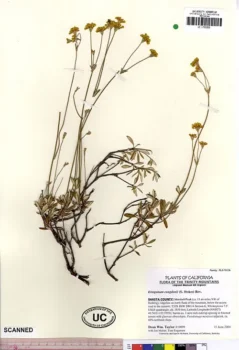
Congdon’s Buckwheat: A Rare California Native Worth Protecting in Your Garden
Meet Congdon’s buckwheat (Eriogonum congdonii), a charming little California native that’s flying under the radar in most gardening circles. This delightful perennial shrub might not be the showiest plant in the nursery, but it’s got character, resilience, and a conservation story that makes it worth your attention.
What Makes Congdon’s Buckwheat Special
Congdon’s buckwheat is a true California original, found nowhere else in the world except the Golden State. This endemic species calls California home exclusively, making it a genuine local treasure for Golden State gardeners looking to create authentic native landscapes.
- Species observed
- No observations
As a perennial shrub, this buckwheat typically grows as a multi-stemmed woody plant, staying relatively compact at usually less than 4-5 feet in height. Its modest stature makes it perfect for smaller gardens or as an understated accent in larger native plant schemes.
A Plant That Needs Our Help
Here’s where things get serious: Congdon’s buckwheat has a Global Conservation Status of S3, meaning it’s considered vulnerable. With typically only 21 to 100 occurrences and between 3,000 to 10,000 individuals remaining in the wild, this species is walking a tightrope toward extinction. But here’s the good news – responsible home gardeners can play a role in its conservation!
Important note: If you’re interested in growing Congdon’s buckwheat, please only purchase from reputable nurseries that propagate their plants responsibly rather than collecting from wild populations. Never collect seeds or cuttings from natural areas.
Garden Appeal and Landscape Role
Don’t let its vulnerable status fool you into thinking this plant is fragile in the garden. Like most buckwheats, Congdon’s variety is a tough customer once established. It produces clusters of small white to pinkish flowers that create a delicate, cloud-like effect above attractive silvery-green foliage.
In your landscape, Congdon’s buckwheat works beautifully as:
- A drought-tolerant groundcover for slopes or difficult areas
- An accent plant in native California gardens
- Part of a xerophytic (dry-loving) plant collection
- A conversation starter about native plant conservation
Pollinator Powerhouse
Here’s where Congdon’s buckwheat really shines: it’s a magnet for pollinators. The flowers attract native bees, butterflies, and a host of beneficial insects. By planting this species, you’re not just adding beauty to your garden – you’re creating habitat for California’s native pollinator communities.
Growing Conditions and Care
The best part about growing Congdon’s buckwheat? It practically takes care of itself once established. This plant thrives in:
- Full sun locations
- Well-draining soils (essential – soggy feet are a death sentence)
- USDA hardiness zones 7-9
- Minimal to no supplemental watering once established
Planting and Care Tips
Success with Congdon’s buckwheat starts with timing and location:
- Plant in fall: This gives the roots time to establish before summer heat
- Choose your spot wisely: Full sun and excellent drainage are non-negotiable
- Water sparingly: Deep, infrequent watering during the first year, then back off completely
- Skip the fertilizer: California natives generally prefer lean soils
- Prune lightly: Remove spent flower heads if desired, but this plant looks good naturally
Why Grow a Rare Plant?
By choosing to grow Congdon’s buckwheat, you’re joining a conservation effort. Every responsibly grown plant in cultivation helps preserve the genetic diversity of this vulnerable species. Plus, you get the satisfaction of growing something truly special – a plant that’s been perfecting its survival strategies in California’s unique climate for thousands of years.
Just remember: with great rarity comes great responsibility. Always source your plants ethically, and consider sharing seeds or cuttings with other conservation-minded gardeners to help build a network of cultivated populations.
Congdon’s buckwheat might not be the easiest plant to find at your local garden center, but the search is worth it. You’ll end up with a resilient, beautiful, and ecologically important addition to your garden – and a great story to tell your fellow gardeners about the rare California gem growing in your backyard.