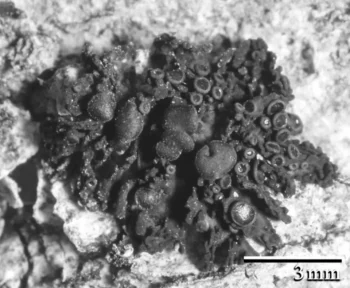
Conglomerate Jelly Lichen: The Fascinating Gelatinous Garden Visitor
Have you ever noticed dark, jelly-like patches on tree bark or rocks in your garden and wondered what they might be? Meet the conglomerate jelly lichen (Collema conglomeratum), one of nature’s most intriguing composite organisms that might be quietly calling your outdoor space home.
What Exactly Is a Conglomerate Jelly Lichen?
Let’s start with the basics – Collema conglomeratum isn’t actually a plant at all! It’s a lichen, which is a remarkable partnership between fungi and algae working together as one organism. Think of it as nature’s ultimate roommate situation, where both partners benefit from the arrangement.
The jelly part of its common name becomes apparent when you see it after rain or in humid conditions. This lichen transforms from a dark, crusty appearance when dry to a gelatinous, almost translucent greenish-black mass when wet. It’s like having a natural mood ring in your garden that changes with the weather!
Where You’ll Find This Native Beauty
As a native species to North America, the conglomerate jelly lichen has been quietly inhabiting our landscapes long before any of us started gardening. You’ll typically spot it growing on tree bark, rocks, or even directly on soil in areas with good air quality and adequate moisture.
Is It Beneficial to Have in Your Garden?
While you can’t exactly plant conglomerate jelly lichen like you would a tomato or a rose bush, having it appear naturally in your garden is actually a wonderful sign! Here’s why:
- Air quality indicator: Lichens are incredibly sensitive to air pollution, so their presence suggests you have clean, healthy air in your garden
- Ecosystem health: They contribute to the overall biodiversity of your outdoor space
- Natural beauty: Their unique appearance adds an interesting textural element to natural landscapes
- Minimal impact: They don’t harm the trees or surfaces they grow on
How to Identify Conglomerate Jelly Lichen
Spotting this fascinating organism is easier than you might think once you know what to look for:
- Wet weather appearance: Dark greenish-black, gelatinous, and somewhat translucent
- Dry weather appearance: Dark, crusty, and much less noticeable
- Texture: Feels jelly-like and soft when moist, brittle when dry
- Location: Found on tree bark (especially smooth-barked trees), rocks, or soil
- Size: Forms patches that can range from small spots to larger colonies
Creating Lichen-Friendly Conditions
While you can’t plant lichens, you can certainly create conditions that make them more likely to appear naturally:
- Maintain clean air: Avoid using chemical sprays and pesticides in areas where you’d like to see lichens
- Provide moisture: Ensure some areas of your garden stay naturally moist
- Keep some wild spaces: Leave some areas of your garden less manicured
- Preserve existing substrates: Don’t remove all rocks or dead wood, as these provide growing surfaces
A Word of Caution
If you do discover conglomerate jelly lichen in your garden, resist the urge to collect it or try to move it elsewhere. Lichens are incredibly slow-growing and sensitive to disturbance. Simply enjoy observing this fascinating organism where nature has placed it.
The Bottom Line
Finding conglomerate jelly lichen in your garden is like receiving a certificate of environmental health. While you can’t cultivate it like traditional garden plants, its natural presence indicates you’re providing a healthy, unpolluted environment for a wide variety of life forms. So the next time you spot these dark, jelly-like patches after a rain, take a moment to appreciate this remarkable example of nature’s cooperation – you’re witnessing one of the most successful partnerships in the natural world!