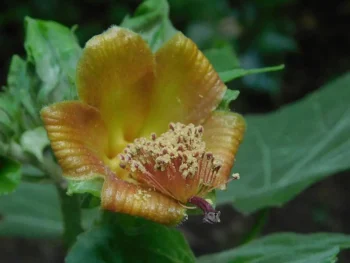
Congo Mahoe: A Caribbean Native Worth Discovering
If you’re passionate about native plants and live in the Caribbean, you might want to get acquainted with Congo mahoe (Hibiscus clypeatus). This lesser-known member of the hibiscus family is a true Caribbean native that deserves more attention from gardeners interested in supporting local ecosystems.
What is Congo Mahoe?
Congo mahoe is a perennial shrub that belongs to the beloved hibiscus genus. Like other shrubs, it’s a multi-stemmed woody plant that typically stays under 13-16 feet tall, though it can occasionally grow taller or develop a single stem depending on environmental conditions. As a perennial, it will grace your garden year after year once established.
Where Does It Call Home?
This charming shrub is native to Puerto Rico and the U.S. Virgin Islands, making it a perfect choice for gardeners in these regions who want to support their local plant communities. Its natural range is quite limited, which makes it all the more special for those lucky enough to grow it.
- Species observed
- No observations
Why Consider Congo Mahoe for Your Garden?
While detailed information about Congo mahoe’s specific garden applications is limited due to its rarity in cultivation, there are several compelling reasons to consider this native:
- It’s a true native species, meaning it’s perfectly adapted to Caribbean growing conditions
- As a hibiscus relative, it likely produces attractive flowers (though specific details about bloom characteristics aren’t well documented)
- Native plants typically require less water and maintenance once established
- Growing natives supports local wildlife and ecosystem health
The Challenge of Growing Lesser-Known Natives
Here’s where things get honest: Congo mahoe is one of those plants that’s more of a botanical treasure than a mainstream garden staple. Information about its specific growing requirements, propagation methods, and garden performance is quite limited. This isn’t necessarily a bad thing—it just means you’ll be somewhat of a pioneer if you choose to grow it!
What We Know About Growing Congo Mahoe
While specific cultivation details are scarce, we can make some educated guesses based on its native habitat and family relationships:
- As a Caribbean native, it’s likely adapted to warm, tropical conditions
- Most hibiscus family members prefer well-draining soil and regular moisture
- Being native to islands, it probably tolerates salt spray and coastal conditions
- It’s best suited for USDA zones that match its native range (likely zones 10-11)
Finding and Growing Congo Mahoe Responsibly
If you’re determined to grow this rare native, your biggest challenge will be finding it. Since it’s not commonly cultivated, you’ll need to:
- Contact native plant societies in Puerto Rico or the Virgin Islands
- Look for botanical gardens or conservation organizations that might have seeds or cuttings
- Ensure any plant material is responsibly sourced and legally obtained
- Consider reaching out to local universities with botany programs
The Bottom Line
Congo mahoe represents the fascinating world of lesser-known native plants. While it might not be the easiest plant to find or grow, it offers the unique satisfaction of cultivating a true local native. If you’re in Puerto Rico or the Virgin Islands and love the idea of growing something truly special and locally adapted, Congo mahoe could be worth the hunt.
Just remember: with rare plants comes responsibility. Always source plant material ethically, never collect from wild populations, and consider sharing seeds or cuttings with other native plant enthusiasts to help preserve this special species for future generations.