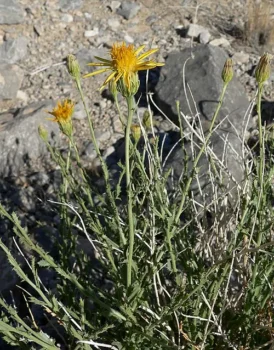
Cooper’s Dogweed: Your Desert Garden’s Fall and Winter Blooming Star
If you’re looking for a native plant that marches to the beat of its own drum, Cooper’s dogweed (Adenophyllum cooperi) might just be your perfect match. While most plants are winding down for winter, this quirky desert dweller is just getting started with its cheerful yellow blooms.
What Is Cooper’s Dogweed?
Cooper’s dogweed is a low-growing perennial shrub that typically stays under 1.5 feet tall, though it can occasionally reach up to 3 feet at maturity. Don’t let the name dogweed put you off – this plant is actually quite the charmer with its compact, bushy form and aromatic foliage that releases a distinctive scent when brushed against.
You might also encounter this plant listed under its synonym Dyssodia cooperi, but regardless of the name on the tag, you’re getting the same delightful desert native.
Where Cooper’s Dogweed Calls Home
This southwestern beauty is native to the lower 48 states, specifically thriving in Arizona, California, Nevada, and Utah. It’s perfectly adapted to the harsh conditions of the Sonoran and Mojave deserts, making it an authentic choice for native plant enthusiasts in these regions.
- Species observed
- No observations
Why You’ll Love Cooper’s Dogweed in Your Garden
Cooper’s dogweed brings several unique qualities to your landscape:
- Reverse seasonal interest: Produces bright yellow, daisy-like flowers primarily in fall and winter when most other plants are dormant
- Drought superstar: Once established, it thrives with minimal to no supplemental watering
- Pollinator magnet: Its late-season blooms provide crucial nectar for bees, butterflies, and other pollinators when few other flowers are available
- Low maintenance: Perfect for gardeners who want beauty without the fuss
- Compact size: Ideal for small spaces, rock gardens, or as a border plant
Perfect Garden Settings
Cooper’s dogweed shines brightest in:
- Desert and xeriscape gardens
- Rock gardens and stone landscapes
- Native plant gardens
- Low-water landscape borders
- Areas where you want year-round structure with seasonal blooms
Growing Cooper’s Dogweed Successfully
The secret to happy Cooper’s dogweed is thinking like a desert plant. This tough little shrub is hardy in USDA zones 8-10 and asks for very little once you understand its needs.
Planting Tips
- Timing: Plant in fall or spring for best establishment
- Location: Choose a spot with full sun exposure
- Soil: Well-draining sandy or rocky soil is essential – this plant absolutely cannot tolerate wet feet
- Spacing: Allow 2-3 feet between plants for proper air circulation
Care and Maintenance
Once established, Cooper’s dogweed is remarkably self-sufficient:
- Watering: Deep, infrequent watering during the first growing season, then rely on natural rainfall
- Fertilizing: Skip the fertilizer – this plant prefers lean, poor soils
- Pruning: Light pruning after blooming can help maintain shape, but it’s not necessary
- Mulching: Use gravel or stone mulch rather than organic mulch to prevent moisture retention
Is Cooper’s Dogweed Right for Your Garden?
Cooper’s dogweed is an excellent choice if you’re gardening in its native range and want a truly low-maintenance native plant that offers something different. Its fall and winter blooming period makes it particularly valuable for extending seasonal interest in desert gardens.
However, this plant might not be the best fit if you garden outside of zones 8-10, prefer lush, green landscapes, or have heavy clay soil with poor drainage. It’s also worth noting that the aromatic foliage has a strong scent that some people find overpowering.
For southwestern gardeners looking to support native ecosystems while creating a unique, low-water landscape, Cooper’s dogweed offers the perfect combination of ecological value and distinctive beauty. Its cheerful yellow blooms brightening up the winter months might just make it your new favorite conversation starter in the garden.