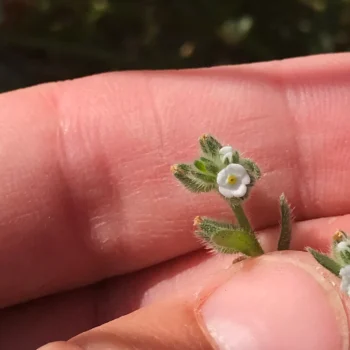
Cooper’s Popcornflower: A Delicate California Native Worth Protecting
If you’re looking to add some understated charm to your California native garden, Cooper’s popcornflower (Plagiobothrys collinus var. californicus) might just be the delicate annual you never knew you needed. This petite member of the borage family brings a subtle beauty that’s easy to overlook but impossible to forget once you notice it.
What Makes Cooper’s Popcornflower Special
Cooper’s popcornflower is a true California native, found exclusively within the Golden State’s diverse landscapes. As an annual forb, this little wildflower completes its entire life cycle in just one growing season, making it a perfect addition to gardens that celebrate the ephemeral beauty of spring wildflowers.
The plant produces clusters of tiny white flowers that, while small individually, create a lovely display when grouped together. True to its popcornflower name, the blooms have a delicate, almost ethereal quality that adds texture and interest to naturalized plantings.
Where You’ll Find It Growing Wild
This California endemic has made itself at home throughout various habitats across the state, from grasslands to open areas and even some disturbed soils. It’s adapted to California’s Mediterranean climate and seasonal rainfall patterns.
- Species observed
- No observations
Important Conservation Considerations
Before you rush out to add Cooper’s popcornflower to your garden, there’s something important to know: this plant has a conservation status that suggests it may be somewhat rare or declining in certain areas. If you’re interested in growing this native beauty, it’s crucial to source seeds or plants only from reputable native plant nurseries that collect responsibly and legally.
Never collect seeds or plants from wild populations, as this can harm already vulnerable communities of this special California native.
Growing Cooper’s Popcornflower Successfully
As an annual, Cooper’s popcornflower is all about timing and the right conditions. Here’s what you need to know:
Ideal Growing Conditions
- Thrives in California’s Mediterranean climate (USDA zones 8-10)
- Prefers full sun to partial shade
- Adapts to various soil types, including somewhat disturbed areas
- Benefits from California’s natural winter rain and dry summer pattern
Planting and Care Tips
- Sow seeds in fall to take advantage of natural winter rains
- Seeds need cool, moist conditions to germinate properly
- Once established, requires minimal watering beyond natural rainfall
- Allow plants to go to seed to encourage natural reseeding for following years
- Works best when planted in groups for maximum visual impact
Garden Design Ideas
Cooper’s popcornflower shines brightest in naturalized settings where its subtle beauty can be appreciated up close. Consider including it in:
- Native wildflower meadows
- Spring ephemeral gardens
- Edges of native shrub plantings
- Areas designed to support native pollinators
While small, the flowers do attract native bees and other tiny pollinators, making this plant a valuable addition to pollinator-friendly gardens.
The Bottom Line
Cooper’s popcornflower offers California gardeners a chance to grow a truly local native that supports the state’s ecological heritage. While it may not be the showiest plant in your garden, its delicate beauty and ecological value make it worth seeking out—just remember to source it responsibly. Sometimes the most rewarding garden experiences come from the smallest, most unassuming plants that connect us directly to the unique natural heritage of our own backyard.