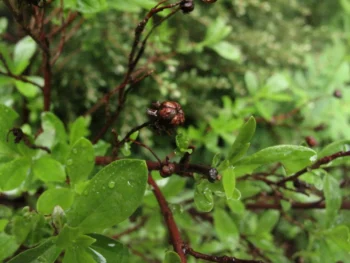
Copperbush: A Hidden Gem for Pacific Northwest Gardens
If you’re looking for a native shrub that adds subtle beauty to your Pacific Northwest garden without demanding constant attention, meet copperbush (Elliottia pyroliflora). This unassuming perennial shrub might not be the showiest plant in the nursery, but it has a quiet charm that makes it a valuable addition to the right garden setting.
What is Copperbush?
Copperbush is a multi-stemmed woody perennial shrub that typically grows 4-5 feet tall, though it can occasionally reach up to 5 feet under ideal conditions. True to its thicket-forming growth habit, this native beauty tends to spread and create natural groupings over time. With its medium-textured green foliage and red flowers (though not particularly conspicuous), copperbush offers a naturalistic presence rather than bold visual impact.
You might also encounter this plant under its scientific synonym, Cladothamnus pyroliflorus, in some botanical references.
Where Does Copperbush Grow Naturally?
This lovely native calls the Pacific Northwest home, naturally occurring in Alaska, British Columbia, Washington, and Oregon. It’s perfectly adapted to the cool, moist conditions of this region and represents a true piece of local ecology.
- Species observed
- No observations
Why Consider Copperbush for Your Garden?
While copperbush won’t stop traffic with flashy blooms, it offers several compelling reasons to include it in your landscape:
- Native plant benefits: Supporting local ecosystems and wildlife
- Low maintenance: Once established, it requires minimal care
- Adaptable: Can handle both wetland and non-wetland conditions
- Naturalistic appeal: Perfect for woodland and native plant gardens
- Moderate growth: Won’t overwhelm your garden space
Growing Conditions: What Copperbush Needs to Thrive
Copperbush is somewhat particular about its growing conditions, but once you understand its preferences, it’s quite manageable:
Soil Requirements
- Acidic soil (pH 5.0-6.0)
- Well-draining, coarse to medium-textured soils work best
- Avoid heavy clay or fine-textured soils
- Minimum root depth of 12 inches
Climate Preferences
- Thrives in cool, moist climates
- Can tolerate temperatures as low as -22°F
- Requires at least 136 frost-free days
- Prefers 40-200 inches of annual precipitation
- Low drought tolerance – consistent moisture is key
Perfect Garden Settings
Copperbush shines in specific garden styles and locations:
- Woodland gardens: Excellent as an understory shrub
- Native plant gardens: Supports local ecosystem health
- Naturalistic landscapes: Its thicket-forming habit creates natural-looking groupings
- Rain gardens: Its facultative wetland status makes it suitable for areas with variable moisture
- Slope stabilization: Root system helps prevent erosion
Planting and Care Tips
Successfully growing copperbush requires attention to its specific needs:
Planting
- Plant spacing: 320-1,280 plants per acre (roughly 4-12 feet apart for home gardens)
- Spring planting typically works best
- Ensure excellent drainage while maintaining consistent moisture
- Amend soil to achieve proper pH if necessary
Ongoing Care
- Regular watering during dry spells (low drought tolerance)
- Mulching helps retain soil moisture and maintain cool root temperatures
- Little to no fertilization needed in appropriate soil conditions
- Minimal pruning required due to naturally attractive growth habit
Important Considerations
Before adding copperbush to your garden, keep these factors in mind:
- Limited propagation options: This plant can be challenging to propagate, so you’ll likely need to purchase from specialized native plant nurseries
- Short lifespan: While beautiful, copperbush has a relatively short lifespan compared to some shrubs
- Specific growing requirements: Not suitable for all garden conditions – needs acidic soil and consistent moisture
- Subtle beauty: If you’re looking for dramatic flowers or fall color, this might not be your plant
The Bottom Line
Copperbush is a plant for gardeners who appreciate subtle native beauty and want to support local ecosystems. While it won’t provide the drama of exotic ornamentals, it offers the satisfaction of growing a true Pacific Northwest native that’s perfectly adapted to regional conditions. If you have the right growing conditions – acidic soil, consistent moisture, and a woodland or naturalistic garden setting – copperbush can be a rewarding, low-maintenance addition that connects your landscape to the broader regional ecosystem.
Just remember: this is a plant that rewards patience and understanding rather than demanding constant attention. Sometimes, the most valuable garden residents are the ones that simply belong.