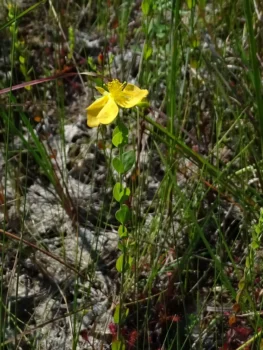
Coppery St. Johnswort: A Native Gem for Wetland Gardens
Meet Hypericum denticulatum, better known as coppery St. Johnswort – a delightful native perennial that’s been quietly brightening up wetland edges and moist gardens across the eastern United States for centuries. While it might not be the flashiest flower in your garden center, this unassuming native has some serious charm and ecological value that make it worth considering for your landscape.
What Makes Coppery St. Johnswort Special?
This native forb (that’s garden-speak for a non-woody flowering plant) brings a gentle yellow glow to summer gardens with its cheerful five-petaled flowers. Growing to a modest 2 feet tall with a spreading, somewhat sprawling habit, coppery St. Johnswort creates a lovely groundcover effect that’s perfect for naturalizing larger areas or filling in those tricky wet spots where other plants might struggle.
The plant gets its coppery common name from the subtle bronze tints that can appear on its foliage, adding another layer of visual interest beyond its bright yellow summer blooms. Don’t expect a towering specimen – this is a slow and steady grower that prefers to spread out rather than shoot up.
Where Does It Call Home?
Coppery St. Johnswort is a true eastern native, naturally occurring across thirteen states from the coastal plains to the mountains. You’ll find it thriving from Alabama north to New York, and from the Atlantic coast west to Indiana and Kentucky. This wide distribution speaks to its adaptability and resilience – always good signs in a garden plant.
- Species observed
- No observations
Why Your Garden (and Local Wildlife) Will Love It
Here’s where coppery St. Johnswort really shines: it’s a multitasker that earns its keep in several ways:
- Pollinator magnet: Those cheerful yellow flowers are like tiny landing pads for native bees and other beneficial insects
- Wetland warrior: With its facultative wetland status, it thrives in those challenging moist areas where many garden favorites fear to tread
- Low maintenance: Once established, it’s pretty much a set-it-and-forget-it kind of plant
- Native plant cred: You’re supporting local ecosystems and providing habitat that native wildlife actually recognizes and uses
Perfect Garden Spots for Coppery St. Johnswort
This adaptable native is particularly well-suited for:
- Rain gardens and bioswales
- Pond or stream edges
- Naturalized meadow areas
- Native plant borders
- Wetland restoration projects
- Areas with seasonal flooding or consistently moist soil
While it loves moisture, don’t worry if your soil isn’t constantly soggy – coppery St. Johnswort has medium drought tolerance once established, making it more versatile than you might expect from a wetland plant.
Growing Conditions That Make It Happy
Coppery St. Johnswort is refreshingly unfussy about many growing conditions, but it does have some preferences:
- Soil: Adaptable to coarse, medium, or fine-textured soils, but prefers acidic conditions (pH 4.8-6.4)
- Moisture: Medium to high moisture levels work best
- Light: Intermediate shade tolerance means it’s happy in partial shade to full sun
- Climate: Thrives in USDA hardiness zones 6-9, handling temperatures down to 2°F
- Fertility: Actually prefers low-fertility soils – no need to pamper it with rich amendments
Planting and Care Tips
Getting coppery St. Johnswort established in your garden is straightforward, though you’ll need a bit of patience with its slow growth rate:
- Propagation: Best grown from container plants or sprigs rather than seed (seeds require cold stratification and can be finicky)
- Planting density: Space plants to achieve 4,800-7,000 plants per acre for restoration projects, or simply space individual plants 1-2 feet apart in home gardens
- Timing: Plant in spring or fall when temperatures are moderate
- Establishment: Keep consistently moist the first year while roots develop
- Maintenance: Minimal once established – occasional watering during dry spells and a light trim after flowering if desired
The Reality Check
Let’s be honest – coppery St. Johnswort isn’t going to win any most spectacular garden plant awards. Its flowers are small, it grows slowly, and it has a somewhat sprawling habit that might not suit formal garden designs. You also won’t find it readily available at most nurseries, so you might need to seek out native plant specialists or propagate it yourself.
However, if you’re looking to create habitat, support native ecosystems, solve drainage challenges, or simply add authentic local character to your landscape, coppery St. Johnswort delivers. It’s the kind of plant that quietly does its job while providing genuine ecological benefits – and sometimes that’s exactly what your garden needs.
The Bottom Line
Coppery St. Johnswort might not be the star of your garden show, but it’s definitely reliable supporting cast. For gardeners interested in native plants, wetland gardening, or creating low-maintenance naturalized areas, this humble perennial offers authentic regional character and genuine ecological value. Just remember to be patient with its slow growth and appreciate it for what it is – a quiet contributor to a healthy, biodiverse landscape.