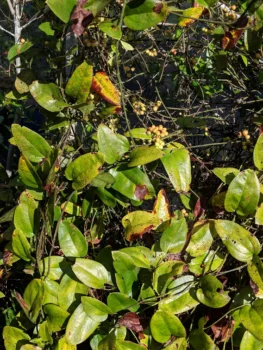
Coral Greenbrier: A Native Climbing Gem for Wetland Gardens
If you’re looking for a native plant that thrives in those perpetually soggy spots in your yard, let me introduce you to coral greenbrier (Smilax walteri). This southeastern native might not win any beauty contests with its thorny stems, but it’s got character—and some seriously gorgeous red berries that’ll make you forget all about those prickles.
What Exactly Is Coral Greenbrier?
Coral greenbrier is a perennial shrub that’s really more of a climbing vine with an attitude. This native beauty can reach about one foot in height but don’t let that fool you—it spreads rapidly and forms thickets that would make any privacy fence jealous. You might also know it by its scientific name, Smilax walteri, or its synonym Smilax megacarpa.
What makes this plant special? Those stunning red berries that appear in summer and persist through fall, creating a spectacular display when most other plants are calling it quits for the season.
Where Does Coral Greenbrier Call Home?
This southeastern charmer is native to 14 states across the lower 48, stretching from Maryland down to Florida and west to Texas. You’ll find it naturally growing in Alabama, Arkansas, Delaware, Florida, Georgia, Louisiana, Maryland, Mississippi, New Jersey, North Carolina, South Carolina, Tennessee, Texas, and Virginia.
- Species observed
- No observations
A Word About Rarity
Before you start planning your coral greenbrier empire, here’s something important to know: this plant has a rarity status of S2S3 in Arkansas, meaning it’s somewhat uncommon to rare in that state. If you’re lucky enough to find coral greenbrier for sale, make sure you’re purchasing from reputable nurseries that source their plants responsibly—no wild harvesting, please!
Why Your Garden (and Local Wildlife) Will Love It
Coral greenbrier isn’t just another pretty face in the garden. This plant is a wetland specialist—it’s classified as Obligate Wetland in both the Atlantic and Gulf Coastal Plain and Eastern Mountains and Piedmont regions. Translation? It almost always grows in wetlands and is perfectly adapted to those challenging soggy conditions.
Here’s what makes it garden-worthy:
- Rapid growth rate fills in spaces quickly
- Bright red berries provide stunning fall and winter interest
- Forms dense thickets perfect for erosion control
- Tolerates shade beautifully
- Long lifespan means it’s a permanent garden investment
- Small green flowers provide nectar for insects in spring
Perfect Growing Conditions
Coral greenbrier is refreshingly honest about what it wants: water, and lots of it. This plant has high moisture requirements and low drought tolerance, so don’t even think about planting it in that dry, sunny spot where nothing else will grow.
Here’s the ideal setup:
- Moisture: Consistently moist to wet soil
- pH: Acidic conditions (4.0-7.0)
- Soil: Adaptable to coarse, medium, or fine-textured soils
- Light: Shade tolerant (perfect for those tricky spots under trees)
- Temperature: Hardy to -8°F, needs at least 180 frost-free days
- Hardiness zones: 6-10
Where to Use Coral Greenbrier in Your Landscape
This climbing beauty is perfect for:
- Rain gardens and bioswales
- Wetland restoration projects
- Erosion control on slopes near water features
- Naturalized woodland edges
- Privacy screening in wet areas
- Wildlife habitat gardens
Just remember—coral greenbrier forms thickets and has thorns, so plant it where you want permanent coverage, not where you’ll be doing a lot of maintenance work!
Planting and Care Tips
The good news? Once established, coral greenbrier is pretty low-maintenance. Here’s how to get it off to a good start:
Planting: Spring is your best bet for planting. You can find it available as container plants, bare root specimens, or grow from seed (though seeds require cold stratification). Plant 2,728 to 10,912 plants per acre if you’re doing a large restoration project.
Establishment: Keep consistently moist during the first growing season. This plant has high seedling vigor, so once it gets going, it really gets going.
Ongoing care: Minimal pruning needed—this plant resprouts readily if damaged. The vegetative spread rate is rapid, so be prepared for it to colonize suitable areas quickly.
Propagation: Seeds are abundant and persist well, with a slow natural spread rate. Commercial availability is routine, which is great news for gardeners.
The Bottom Line
Coral greenbrier might not be the flashiest plant in the garden center, but if you’ve got wet, shady conditions and want a tough native that provides year-round interest and wildlife habitat, this could be your new best friend. Just make sure you source it responsibly, give it the moisture it craves, and be prepared for it to make itself very much at home in your landscape.
Those bright red berries against winter’s backdrop? Totally worth a few thorns.