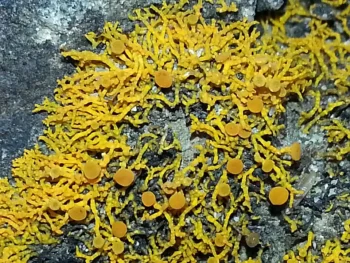
Coral Orange Lichen: A Colorful Natural Wonder You Can’t Plant (But Might Find!)
Have you ever spotted bright orange patches on rocks during a hike and wondered what they were? You might have been looking at coral orange lichen (Caloplaca coralloides), one of nature’s most vibrant little organisms. But here’s the thing – this isn’t actually a plant you can add to your garden shopping list!
What Exactly Is Coral Orange Lichen?
Let’s clear up some confusion right away. Despite its plant-like appearance, coral orange lichen isn’t a plant at all. It’s actually a fascinating partnership between a fungus and an algae (or sometimes a cyanobacterium) living together in perfect harmony. Think of it as nature’s ultimate roommate situation – the fungus provides structure and protection, while the algae whips up food through photosynthesis.
Scientifically known as Caloplaca coralloides, this lichen also goes by the synonym Polycauliona coralloides in some scientific circles. But honestly, coral orange lichen is much easier to remember and perfectly describes its stunning coral-to-orange coloration.
Where You’ll Spot This Orange Beauty
Coral orange lichen is native to North America, where it makes its home on rocky surfaces throughout various regions. You’re most likely to encounter it growing on calcareous rocks (that’s limestone and similar calcium-rich stones) in natural settings.
Is It Beneficial to Have Around Your Garden?
While you can’t exactly plant coral orange lichen in your flower beds, having it appear naturally on stone features in your landscape is actually pretty wonderful. Here’s why:
- It adds natural color and texture to rock walls, stone pathways, or boulder features
- Lichens are excellent indicators of good air quality – their presence suggests your garden environment is healthy
- They contribute to the natural ecosystem, slowly breaking down rock surfaces and creating soil over very long periods
- They provide habitat for tiny insects and other micro-organisms
How to Identify Coral Orange Lichen
Spotting coral orange lichen is pretty straightforward once you know what to look for:
- Color: Bright orange to coral-colored patches that really stand out against gray or white rocks
- Texture: Forms crusty, somewhat bumpy patches on rock surfaces
- Location: Almost exclusively found growing on limestone, concrete, or other calcium-rich surfaces
- Size: Individual colonies can range from tiny spots to patches several inches across
- Growth pattern: Tends to form circular or irregular patches that may merge with neighboring colonies
Can You Encourage It in Your Landscape?
Here’s where things get interesting – you can’t plant or cultivate coral orange lichen like a traditional plant, but you might be able to create conditions where it could naturally establish itself:
- Include limestone rocks, concrete features, or calcium-rich stone in your landscape design
- Maintain good air quality around your property (avoid excessive pesticide use)
- Be patient – lichens grow incredibly slowly, sometimes taking years to become noticeable
- Avoid cleaning or scrubbing stone surfaces where you’d like lichens to grow
A Word of Caution
If you do spot coral orange lichen growing naturally on rocks in your landscape, resist the urge to scrub it away! These slow-growing organisms take years to establish and play important roles in their ecosystems. Plus, that pop of natural orange color is pretty spectacular against neutral stone backgrounds.
The Bottom Line
While coral orange lichen won’t be making it onto your plant shopping list anytime soon, it’s one of those delightful natural surprises that can add unexpected beauty to rocky areas of your landscape. Think of it as nature’s way of decorating – no planting required, just patience and the right conditions. And hey, if it does show up on your stone features, consider yourself lucky to have such a colorful little tenant!