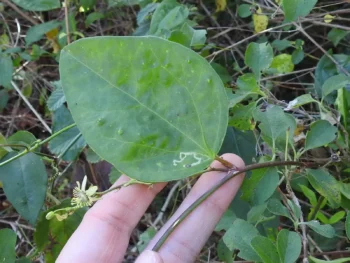
Corkystem Passionflower: A Delicate Native Vine with Big Personality
Meet the corkystem passionflower (Passiflora pallida), a charming native vine that’s equal parts delicate beauty and determined survivor. This perennial climbing plant brings a touch of tropical elegance to gardens while supporting local wildlife – though it definitely has some quirks you’ll want to know about before inviting it into your landscape.
What Makes Corkystem Passionflower Special
Don’t let the name fool you – this isn’t your typical showy passionflower. The corkystem passionflower produces small, understated white to pale yellow blooms that may be modest in size but pack a punch when it comes to attracting pollinators. What really sets this plant apart is its distinctive corky stems that give it both its common name and a unique textural element in the garden.
As a native forb herb, this perennial lacks the woody tissue of shrubs and trees, instead growing as a climbing or trailing vine that can serve multiple roles in your landscape design.
Where It Calls Home
Corkystem passionflower has quite the travel resume! It’s native to parts of the southeastern United States, including Florida and Texas, as well as various Caribbean territories like Puerto Rico and the U.S. Virgin Islands. You’ll also find it naturally occurring on Navassa Island. Interestingly, it has also established itself in various Pacific Basin locations, though it’s considered introduced rather than native there.
- Species observed
- No observations
Garden Role and Landscape Potential
This versatile vine works beautifully in several garden settings:
- Wildlife gardens: Its flowers attract butterflies, bees, and other small pollinators
- Native plant gardens: Perfect for supporting local ecosystems
- Coastal landscapes: Naturally salt-tolerant and tough
- Ground cover areas: Can spread to cover large areas naturally
- Naturalistic settings: Adds authentic wild beauty to informal landscapes
Growing Conditions and Care
The good news? Corkystem passionflower is refreshingly low-maintenance once you understand its needs:
Climate: Thrives in USDA hardiness zones 9-11, making it ideal for warm, subtropical climates.
Light and Soil: Adapts well to full sun or partial shade conditions. It prefers well-draining soil but isn’t particularly fussy about soil type once established.
Water: Drought-tolerant once established, though regular watering during the first growing season helps it get established.
Maintenance: This is where things get interesting – corkystem passionflower can be quite the spreader! Regular pruning helps keep it in bounds and prevents it from taking over more than you bargained for.
The Reality Check: What You Need to Know
Here’s where we need to have an honest conversation about this plant’s personality. While corkystem passionflower is undeniably beautiful and beneficial for wildlife, it can be quite aggressive in its spreading habits. This isn’t necessarily a bad thing if you have the space and want a natural ground cover, but it’s definitely something to consider if you’re working with a smaller garden or prefer more controlled plantings.
Think of it as the friend who’s wonderful to have around but tends to make themselves very much at home wherever they go!
Planting and Care Tips
Ready to give corkystem passionflower a try? Here’s how to set yourself up for success:
- Site selection: Choose a location where spreading won’t be problematic
- Planting time: Spring is ideal in most climates
- Support: Provide trellises or fencing if you want it to climb rather than spread
- Pruning: Regular trimming keeps growth manageable and encourages flowering
- Monitoring: Keep an eye on its spread and trim back as needed
Benefits for Wildlife
Despite its enthusiastic growth habits, corkystem passionflower earns major points for its wildlife value. The flowers attract various pollinators, contributing to the health of local ecosystems. As a native plant, it has co-evolved with local wildlife and provides resources that non-native plants simply can’t match.
Is Corkystem Passionflower Right for Your Garden?
This plant is perfect for gardeners who:
- Want to support native wildlife and pollinators
- Have space for a spreading groundcover or climbing vine
- Live in warm climates (zones 9-11)
- Appreciate low-maintenance plants
- Don’t mind doing occasional management pruning
However, you might want to consider alternatives if you have a small garden, prefer highly controlled plantings, or live outside its hardiness range.
The corkystem passionflower proves that native plants don’t have to be boring or difficult to grow. With its delicate flowers, interesting texture, and wildlife benefits, it can be a wonderful addition to the right garden setting. Just make sure you’re prepared for its enthusiastic personality – this little vine definitely believes that if something’s worth doing, it’s worth doing with gusto!