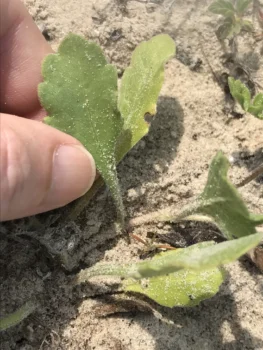
Corpus Christi Fleabane: A Charming Native Ground Cover for Gulf Coast Gardens
If you’re looking for a tough, no-fuss native plant that can handle the challenging conditions of the Gulf Coast, meet Corpus Christi fleabane (Erigeron procumbens). This delightful little wildflower might have an unfortunate common name, but don’t let that fool you – it’s actually a charming addition to naturalized gardens and coastal landscapes.
What is Corpus Christi Fleabane?
Corpus Christi fleabane is a perennial forb native to the Gulf Coast region. As a forb, it’s essentially a soft-stemmed flowering plant without woody tissue – think of it as nature’s version of a low-maintenance perennial that comes back year after year. This spreading ground cover produces clusters of small, daisy-like flowers that add a delicate touch to any garden setting.
Where Does It Grow Naturally?
This native beauty calls the Gulf Coast home, naturally occurring in Louisiana, Mississippi, and Texas. It’s perfectly adapted to the unique conditions of this region, including sandy soils, salt spray, and the occasional hurricane-force winds that Gulf Coast gardeners know all too well.
- Species observed
- No observations
Why Choose Corpus Christi Fleabane for Your Garden?
There are several compelling reasons to consider this native plant:
- True native credentials: As a plant native to the lower 48 states, it supports local ecosystems and wildlife
- Adaptable nature: Its facultative wetland status means it can handle both wet and dry conditions
- Low maintenance: Once established, it requires minimal care
- Pollinator friendly: The small flowers attract beneficial insects and native bees
- Coastal tough: Built to withstand salt spray and sandy conditions
Garden Design Ideas
Corpus Christi fleabane works wonderfully in several landscape settings:
- Naturalized areas: Perfect for creating that wild meadow look
- Coastal gardens: Thrives in beachfront and salt-tolerant landscapes
- Ground cover: Its spreading habit makes it excellent for covering difficult areas
- Wildflower meadows: Combines beautifully with other native Gulf Coast wildflowers
Growing Conditions and Care
The beauty of working with native plants like Corpus Christi fleabane is that they’re already adapted to your local conditions. Here’s what this hardy plant prefers:
- USDA Hardiness Zones: 8-10 (perfect for the Gulf Coast region)
- Light requirements: Full sun to partial shade
- Soil preferences: Tolerates sandy soils and various soil types
- Water needs: Drought tolerant once established, but can handle wet conditions too
- Special considerations: Salt tolerant, making it ideal for coastal properties
Planting and Maintenance Tips
Getting started with Corpus Christi fleabane is refreshingly simple:
- Plant in spring or fall for best establishment
- Space plants according to desired coverage area
- Water regularly during the first growing season
- Once established, minimal watering needed
- Allow natural spreading for ground cover effect
- Deadhead spent flowers to encourage continued blooming
Supporting Local Wildlife
By choosing native plants like Corpus Christi fleabane, you’re creating habitat for local wildlife. The flowers provide nectar for small pollinators and beneficial insects, contributing to the health of your local ecosystem. It’s a small but meaningful way to support biodiversity right in your own backyard.
The Bottom Line
Corpus Christi fleabane may not be the showiest plant in the garden, but it’s exactly the kind of reliable, adaptable native that makes Gulf Coast gardening a joy rather than a struggle. If you’re working with challenging coastal conditions or simply want to support local wildlife with minimal effort, this charming little fleabane deserves a spot in your landscape. Plus, there’s something satisfying about growing a plant that truly belongs in your corner of the world.