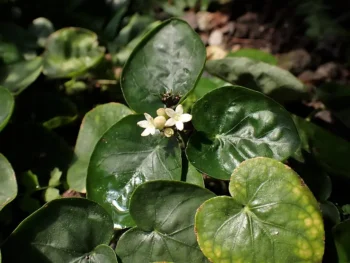
Corrida Yerba de Guava: A Charming Native Groundcover for Tropical Gardens
If you’re looking for a delicate, low-maintenance groundcover that’s truly native to tropical U.S. territories, let me introduce you to corrida yerba de guava (Geophila repens). This little-known gem might just be the perfect addition to your shaded garden spaces, especially if you’re gardening in Puerto Rico, the U.S. Virgin Islands, or Pacific territories like Guam and Palau.
What is Corrida Yerba de Guava?
Corrida yerba de guava is a perennial herbaceous plant that belongs to the coffee family. As a forb, it lacks woody stems and stays close to the ground, making it an excellent choice for creating a living carpet in your garden. You might also see it listed under its synonyms Geophila herbacea or Rondeletia repens in older botanical references.
Where Does It Grow Naturally?
This charming groundcover is native to several tropical regions including Puerto Rico, the U.S. Virgin Islands, Guam, and Palau. It’s also found throughout the Pacific Basin, though not in Hawaii. By choosing this plant, you’re supporting local ecosystems and preserving regional biodiversity.
- Species observed
- No observations
Why Consider Growing Corrida Yerba de Guava?
There are several compelling reasons to add this native plant to your tropical garden:
- True native species: Perfect for gardeners who want to support local wildlife and maintain ecological balance
- Low maintenance: Once established, it requires minimal care
- Versatile growing conditions: As a facultative wetland plant, it can handle both moist and moderately dry conditions
- Delicate beauty: Small, heart-shaped leaves and tiny white flowers create subtle visual interest
- Pollinator support: The small flowers attract beneficial insects like tiny bees and flies
Ideal Growing Conditions
Corrida yerba de guava thrives in:
- Light: Partial to full shade (perfect for those tricky shaded spots!)
- Soil: Moist, well-draining soil rich in organic matter
- Moisture: Consistent moisture, though it can tolerate some drying
- Climate zones: USDA zones 10-12 only (tropical and subtropical regions)
Perfect Garden Settings
This groundcover works beautifully in:
- Naturalized woodland gardens
- Shaded borders and edges
- Areas near water features where soil stays consistently moist
- Native plant gardens focused on regional species
- Low-traffic areas where a delicate groundcover can spread undisturbed
Growing and Care Tips
The best part about corrida yerba de guava? It’s remarkably easy to grow once you understand its preferences:
- Planting: Choose a shaded location with rich, organic soil
- Watering: Keep soil consistently moist but not waterlogged
- Fertilizing: Generally unnecessary if planted in organically rich soil
- Maintenance: Minimal pruning needed; allow it to spread naturally
- Propagation: Spreads naturally through creeping growth
Things to Keep in Mind
While this plant is generally wonderful, there are a few considerations:
- Only suitable for tropical climates (zones 10-12)
- Can spread, so give it appropriate space or contained areas
- May go dormant or struggle during dry periods without adequate moisture
- Limited availability in nurseries due to its specialized native range
Supporting Local Ecosystems
By choosing corrida yerba de guava, you’re doing more than just adding a pretty groundcover to your garden. You’re supporting local wildlife, preserving genetic diversity of native plants, and creating habitat that indigenous species have co-evolved with over thousands of years. While we don’t have complete data on all the wildlife it supports, native plants typically provide food and shelter for local insects, birds, and other creatures in ways that non-native plants simply cannot.
The Bottom Line
If you’re gardening in Puerto Rico, the U.S. Virgin Islands, Guam, or Palau, corrida yerba de guava deserves a spot in your native plant palette. This humble groundcover may not be the showiest plant in your garden, but it offers reliable performance, ecological benefits, and the satisfaction of growing something truly native to your region. Plus, there’s something special about cultivating a plant that has been quietly thriving in your local landscape long before any of us arrived on the scene!