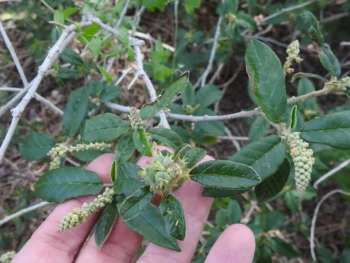
Cortez’s Croton: A Rare Texas Native Worth Knowing About
If you’re passionate about native Texas plants, you might have stumbled across the name Cortez’s croton (Croton cortesianus) in your botanical wanderings. This perennial shrub is one of those mysterious native plants that doesn’t get much spotlight in the gardening world – and there’s a good reason for that!
What Makes Cortez’s Croton Special
Cortez’s croton is a native Texas shrub that belongs to the diverse Croton genus. As a perennial, multi-stemmed woody plant, it typically grows as a shrub reaching heights of 13 to 16 feet under normal conditions, though it can sometimes grow taller or develop a single stem depending on its environment.
This plant is exclusively native to the lower 48 states, with its range limited to Texas. It’s what we call an endemic species – meaning it naturally occurs nowhere else in the world except the Lone Star State.
- Species observed
- No observations
The Challenge for Home Gardeners
Here’s where things get tricky for gardeners interested in Cortez’s croton: there’s remarkably little information available about this native plant. Unlike popular natives like bluebonnets or lantana, Cortez’s croton seems to fly under the radar in both botanical literature and horticultural circles.
What we don’t know includes:
- Specific growing conditions and soil preferences
- USDA hardiness zones
- Pollinator and wildlife benefits
- Propagation methods
- Availability in the nursery trade
- Conservation status
Should You Try to Grow It?
The limited information about Cortez’s croton suggests it might be quite rare or have very specific habitat requirements that make it challenging to cultivate. Without knowing its conservation status or proper growing requirements, it’s difficult to recommend actively seeking out this plant for your garden.
If you’re determined to explore this native species, here are some considerations:
- Contact local native plant societies or botanical experts in Texas for guidance
- Ensure any plant material is ethically and legally sourced
- Consider that it may have very specific habitat needs that are hard to replicate
Better-Known Texas Native Alternatives
While Cortez’s croton remains an enigma, Texas offers plenty of well-documented native shrubs that provide excellent wildlife value and are readily available:
- Fragrant sumac (Rhus aromatica)
- Agarito (Mahonia trifoliolata)
- Texas sage (Leucophyllum species)
- Flameleaf sumac (Rhus lanceolata)
The Bottom Line
Cortez’s croton represents one of those fascinating native plants that reminds us how much we still don’t know about our local flora. While it’s exciting to discover lesser-known natives, the lack of cultivation information makes it more of a botanical curiosity than a practical garden choice for most home gardeners.
If you’re interested in supporting Texas native plants, focus on the many well-documented species that are readily available and proven to thrive in cultivation. Save the rare and mysterious ones like Cortez’s croton for the botanists and specialized conservationists who can properly study and protect them.