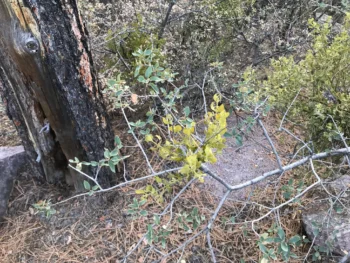
Cory’s Mistletoe: A Unique Native Parasitic Plant of the Southwest
Meet Cory’s mistletoe (Phoradendron coryae), one of nature’s more unusual native plants that calls the American Southwest home. While you won’t find this perennial shrub at your local garden center, understanding this fascinating species can deepen your appreciation for the complex web of relationships in native ecosystems.
What Makes Cory’s Mistletoe Special
Cory’s mistletoe belongs to a group of plants that have mastered the art of living off others – but in a surprisingly sustainable way. As a parasitic shrub, it attaches itself to host trees and draws water and nutrients from them. Unlike the mistletoe you might hang in doorways during the holidays, this southwestern native has adapted to thrive in the arid landscapes of Arizona, New Mexico, and Texas.
This species is also known by its scientific synonyms Phoradendron havardianum and Phoradendron villosum subspecies coryae, which you might encounter in older botanical references.
Where You’ll Find It Growing Wild
Cory’s mistletoe has carved out its niche across three southwestern states: Arizona, New Mexico, and Texas. This native species has evolved alongside the region’s trees for thousands of years, forming part of the natural ecosystem balance that makes these landscapes so unique.
- Species observed
- No observations
Why You Can’t (And Shouldn’t Try to) Grow It
Here’s where Cory’s mistletoe differs dramatically from typical garden plants – you simply cannot cultivate it in the traditional sense. As a parasitic plant, it requires a specific host tree to survive, and attempting to establish it artificially could potentially harm healthy trees in your landscape.
Instead of trying to grow Cory’s mistletoe, consider these approaches:
- Appreciate it in its natural habitat during hiking or nature walks
- Support conservation efforts that protect native southwestern ecosystems
- Choose other native southwestern plants that support local wildlife
Its Role in the Ecosystem
While we don’t have complete data on all of Cory’s mistletoe’s wildlife benefits, mistletoes in general play important ecological roles. Many provide berries that feed birds, and the dense growth can offer nesting sites for various species. The relationship between mistletoe and its host trees, while parasitic, has evolved over millennia and represents a natural balance in healthy ecosystems.
Growing Native Alternatives Instead
If you’re drawn to the unique character that native plants bring to southwestern landscapes, consider these cultivatable alternatives that capture the spirit of the region:
- Desert willow for graceful, drought-tolerant beauty
- Palo verde trees for stunning yellow spring blooms
- Native agaves and yuccas for architectural interest
- Penstemon species for colorful, pollinator-friendly flowers
The Bottom Line
Cory’s mistletoe represents one of nature’s more specialized relationships – a reminder that not every native plant belongs in our gardens, even if we admire its uniqueness. By understanding and respecting plants like this one, we can better appreciate the intricate connections that make native ecosystems so resilient and fascinating.
The next time you’re exploring the southwestern landscape, keep an eye out for the distinctive clumps of mistletoe high in the trees – you might just spot this remarkable native doing what it does best: living in perfect, parasitic harmony with its chosen host.