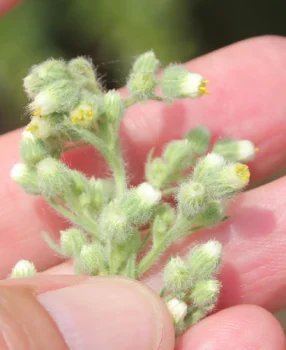
Coulter’s Horseweed: A Resilient Native Annual for Water-Wise Gardens
Meet Coulter’s horseweed (Laennecia coulteri), a scrappy little native annual that’s tougher than its delicate appearance might suggest. This southwestern wildflower has been quietly thriving in some of America’s most challenging landscapes for centuries, and it just might be the low-maintenance addition your drought-tolerant garden has been waiting for.
What is Coulter’s Horseweed?
Coulter’s horseweed is a native annual forb – essentially a non-woody herbaceous plant that completes its entire life cycle in a single growing season. Don’t let the horseweed name fool you into thinking it’s just another weed to pull from your garden. This resilient little plant produces clusters of small, daisy-like flowers that range from white to pale pink, creating a delicate, airy texture in the landscape.
You might also encounter this plant listed under its former scientific names, including Conyza coulteri, as botanical nomenclature has evolved over the years. But regardless of what you call it, this southwestern native has earned its place in water-wise gardens across its range.
Where Does Coulter’s Horseweed Grow Naturally?
This hardy annual calls the American Southwest home, thriving naturally across Arizona, California, Colorado, Nevada, New Mexico, Texas, and Utah. It’s perfectly adapted to the boom-and-bust moisture cycles of these regions, making it an excellent choice for gardeners dealing with similar challenging conditions.
- Species observed
- No observations
Why Consider Growing Coulter’s Horseweed?
If you’re looking for a native plant that practically grows itself, Coulter’s horseweed might be your new best friend. Here’s what makes it appealing:
- Drought tolerance: Once established, this plant can handle extended dry periods like a champ
- Pollinator magnet: The small flowers attract bees, flies, and other beneficial insects
- Low maintenance: As an annual, it asks for very little beyond basic growing conditions
- Native credentials: Supporting local ecosystems while reducing your garden’s environmental impact
- Adaptable: Tolerates poor soils and challenging growing conditions
The Fine Print: What to Consider
Before you rush out to find seeds, there are a few things to keep in mind. Coulter’s horseweed is a prolific self-seeder, which can be either a blessing or a challenge depending on your garden goals. In the right setting – like a wildflower meadow or naturalized area – this trait is fantastic. In a formal perennial border, you might find yourself doing more management than you bargained for.
The plant’s wetland status varies by region, meaning it can adapt to different moisture conditions. In some areas, it leans toward wetter conditions, while in others, it’s perfectly content in drier spots. This adaptability is great for the plant but means you’ll want to observe how it behaves in your specific location.
Growing Coulter’s Horseweed Successfully
The beauty of this native annual lies in its simplicity. Coulter’s horseweed typically grows 1-4 feet tall with a somewhat upright, branching habit that adds nice texture to informal plantings.
Ideal Growing Conditions
- Light: Full sun is preferred
- Soil: Well-draining soil is essential; tolerates poor, rocky, or sandy soils
- Water: Drought tolerant once established; avoid overwatering
- USDA Zones: Hardy as an annual in zones 4-9
Planting and Care Tips
Getting Coulter’s horseweed established is refreshingly straightforward:
- Timing: Direct seed in fall for spring germination, or sow in early spring
- Seeding: Scatter seeds on prepared soil surface and lightly rake in
- Watering: Provide occasional water during establishment, then let nature take over
- Maintenance: Minimal care needed; deadhead if you want to prevent excessive self-seeding
Perfect Garden Settings
Coulter’s horseweed shines in casual, naturalistic settings. Consider it for:
- Xeriscape and drought-tolerant gardens
- Native plant gardens and wildflower meadows
- Naturalized areas where self-seeding is welcome
- Edges of cultivated areas for a soft transition to wilder spaces
- Pollinator gardens focused on native species
The Verdict
Coulter’s horseweed is one of those plants that rewards gardeners who appreciate subtle beauty and ecological function over flashy blooms. If you’re working with challenging growing conditions, want to support native pollinators, or simply love the idea of a plant that thrives with minimal input, this southwestern native deserves consideration.
Just remember that with great adaptability comes the responsibility to monitor its spread. In the right garden setting, Coulter’s horseweed can be a delightful, low-maintenance addition that connects your landscape to the broader ecosystem. In more formal settings, you might find yourself playing referee between this enthusiastic self-seeder and your other garden plants.
Either way, there’s something satisfying about growing a plant that’s perfectly at home in your region – no coddling required, just the simple pleasure of working with nature rather than against it.