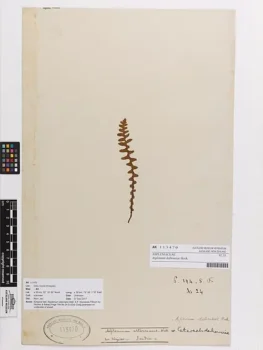
Discovering Countess Dalhousie’s Spleenwort: A Rare Arizona Native Fern
Meet Countess Dalhousie’s spleenwort (Asplenium dalhousiae), one of Arizona’s most elusive native ferns. This little-known perennial fern carries the distinguished name of a British countess, yet remains one of the botanical world’s best-kept secrets. If you’re a native plant enthusiast with a passion for rare specimens, this mysterious fern might just capture your imagination.
What Makes This Fern Special?
Countess Dalhousie’s spleenwort belongs to the spleenwort family, a group of ferns known for their ability to thrive in rocky, challenging environments. Like other members of the Asplenium genus, this fern has adapted to life in crevices and rocky outcroppings, making it a true survivor in harsh landscapes.
As a perennial fern, it returns year after year, slowly establishing itself in its preferred rocky habitat. The scientific community also recognizes it under the synonym Ceterach dalhousiae, reflecting its taxonomic history.
Where to Find This Elusive Native
This rare fern calls Arizona home, making it a true southwestern native. Its limited distribution suggests it has very specific habitat requirements and may be quite uncommon even within its native range. The fern’s presence is likely restricted to particular microclimates and geological formations within the state.
- Species observed
- No observations
Is This Fern Right for Your Garden?
Here’s where things get interesting – and challenging. Countess Dalhousie’s spleenwort is so rare that very little is documented about its specific growing requirements or garden performance. This presents both an opportunity and a responsibility for adventurous gardeners.
The Appeal:
- Authentic Arizona native with unique heritage
- Likely drought-tolerant once established
- Perfect for rock gardens and naturalistic landscapes
- Adds botanical diversity to native plant collections
The Challenges:
- Extremely limited availability
- Unknown specific growing requirements
- Potentially very slow-growing
- May require very specific conditions to thrive
Growing Conditions and Care
Based on its spleenwort heritage and Arizona origins, Countess Dalhousie’s spleenwort likely prefers:
- Well-draining, rocky soil
- Partial shade to filtered sunlight
- Minimal supplemental watering once established
- Protection from extreme heat and cold
- Good air circulation
Given Arizona’s climate, this fern is probably suitable for USDA hardiness zones 8-10, though its specific cold tolerance remains undocumented.
A Word of Caution and Responsibility
If you’re lucky enough to encounter this rare fern, please exercise extreme caution and responsibility. Its rarity means that any specimens should only be obtained through ethical, sustainable sources – never collected from the wild. Consider this fern a conservation priority rather than a garden acquisition.
Alternative Spleenworts for Your Garden
While you search for information about Countess Dalhousie’s spleenwort, consider these more readily available native alternatives:
- Maidenhair spleenwort (Asplenium trichomanes)
- Walking fern (Asplenium rhizophyllum)
- Other regional native ferns suited to your specific location
The Bottom Line
Countess Dalhousie’s spleenwort represents the fascinating world of rare native plants that exist at the edges of our botanical knowledge. While it may not be practical for most gardens, it serves as a reminder of the incredible diversity hidden in our natural landscapes. If you’re passionate about rare natives and have the expertise to work with challenging species, this fern could be a worthy conservation project – just remember to source responsibly and contribute to our understanding of this mysterious Arizona treasure.
For most gardeners, appreciating this fern from afar while supporting conservation efforts and choosing more readily available native alternatives will be the most responsible approach. Sometimes the rarest plants teach us the most about the value of preservation and the wonder of discovery.