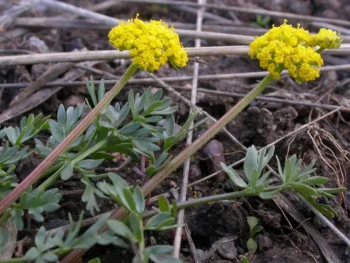
Cous Biscuitroot: The Early Bird of Native Wildflowers
If you’re looking for a native wildflower that kicks off the growing season with a burst of sunshine, meet cous biscuitroot (Lomatium cous). This unassuming little perennial might not win any beauty contests in midsummer, but when it comes to early spring charm and ecological value, it’s a true garden champion.
What Is Cous Biscuitroot?
Cous biscuitroot is a native North American perennial forb that belongs to the carrot family. Despite its humble appearance, this plant packs a punch when it comes to supporting local ecosystems. It’s a rhizomatous grower, meaning it spreads slowly underground to form small colonies over time.
You might also see this plant listed under its former scientific names, including Lomatium circumdatum or Lomatium montanum, but Lomatium cous is the current accepted name.
Where Does It Call Home?
This hardy native has quite an impressive range across western North America. You’ll find cous biscuitroot growing naturally in Alberta, Saskatchewan, Idaho, Montana, Nevada, North Dakota, Oregon, South Dakota, Utah, Washington, and Wyoming. It’s well-adapted to the challenging conditions of the Great Basin and northern Rocky Mountain regions.
- Species observed
- No observations
Garden Appeal: Small but Mighty
Don’t let its modest 0.8-foot height fool you – cous biscuitroot brings serious value to the garden. Here’s what makes it special:
- Bright yellow umbrella-shaped flowers appear in early spring when little else is blooming
- Fine-textured green foliage adds delicate texture to plant combinations
- Semi-erect growth habit works well as a naturalizing groundcover
- Rapid growth rate means it establishes quickly once planted
Perfect Garden Companions
Cous biscuitroot shines in specific garden settings where its unique qualities can be fully appreciated:
- Rock gardens: Its low stature and drought tolerance make it perfect for tucking between stones
- Native plant gardens: Pairs beautifully with other western natives
- Xeriscape designs: Thrives in low-water landscapes
- Prairie restorations: Helps recreate natural grassland ecosystems
A Pollinator’s Best Friend
Here’s where cous biscuitroot really earns its keep: it’s an absolute pollinator magnet in early spring. When most plants are still sleeping, this little powerhouse is serving up nectar to hungry native bees, beneficial flies, and other pollinators emerging from winter. It’s like opening the first coffee shop in town – everyone’s grateful for the service!
Growing Conditions: Tough as Nails
Cous biscuitroot is refreshingly low-maintenance once you understand its preferences:
- Soil: Prefers coarse to medium-textured, well-draining soils (avoid heavy clay)
- pH: Adaptable to slightly acidic to moderately alkaline conditions (6.0-8.5)
- Water: Extremely drought tolerant with low moisture requirements
- Sun: Full sun only – this plant won’t tolerate shade
- Climate: Hardy in USDA zones 3-7, tolerating temperatures down to -28°F
- Precipitation: Thrives with just 8-16 inches of annual rainfall
Planting and Care Tips
Growing cous biscuitroot successfully is all about working with its natural preferences:
Getting Started
- Propagation is primarily by seed – you’ll need about 100,000 seeds per pound
- Direct seed in fall for best results
- Plant at a density of 1,700-4,800 plants per acre for restoration projects
- Ensure at least 105 frost-free days in your growing season
Ongoing Care
- Very low fertility requirements – avoid over-fertilizing
- Deep watering occasionally is better than frequent shallow watering
- Allow foliage to die back naturally in fall
- Minimal maintenance required once established
What to Expect
Cous biscuitroot has a relatively short lifespan for a perennial, but it makes up for this by spreading slowly via rhizomes and potentially self-seeding. The plant is most active and attractive in spring, with flowers appearing in early spring followed by brown seeds that aren’t particularly showy.
After flowering, the fine-textured foliage provides a nice backdrop for other plants throughout the growing season, though it’s not particularly conspicuous in fall.
The Bottom Line
Cous biscuitroot might not be the flashiest plant in your garden, but it’s definitely one of the hardest working. If you’re looking to support native pollinators, create a low-maintenance landscape, or add authentic regional character to your plantings, this tough little native deserves a spot in your garden. Just remember: give it sun, good drainage, and space to spread, and it’ll reward you with years of early spring sunshine and buzzing pollinator activity.