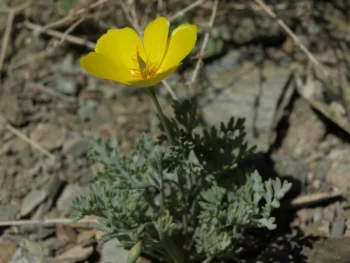
Coville’s Poppy: A Rare Gem for Native Plant Enthusiasts
If you’re passionate about native plants and love discovering botanical treasures that most gardeners have never heard of, Coville’s poppy (Eschscholzia minutiflora covillei) might just capture your heart. This delicate annual wildflower is one of nature’s more elusive beauties, belonging to the same family as the famous California poppy but with its own unique charm and story.
What Makes Coville’s Poppy Special?
Coville’s poppy is a native North American annual forb – essentially a soft-stemmed flowering plant that completes its entire life cycle in one growing season. Unlike woody shrubs or trees, this little poppy stays herbaceous throughout its life, with all its growing energy focused on producing those precious blooms before setting seed.
You might also encounter this plant listed under its synonyms Eschscholzia covillei Greene or Eschscholzia minutiflora S. Watson var. darwinensis M.E. Jones in older botanical references – botanists love to keep us on our toes with name changes!
Where Does It Call Home?
This native beauty has a rather exclusive address, naturally occurring only in California and Nevada. Its limited geographic range makes it a true regional specialty, perfectly adapted to the unique conditions of the American Southwest.
- Species observed
- No observations
A Word About Rarity
Here’s something important to know: Coville’s poppy carries a Global Conservation Status of S5T3, indicating it has some conservation significance. If you’re considering adding this plant to your garden, please ensure you source seeds or plants responsibly from reputable native plant nurseries or seed companies that collect ethically. Never collect from wild populations – let’s keep these beautiful plants thriving in their natural habitats for future generations to enjoy.
Is Coville’s Poppy Right for Your Garden?
This poppy is definitely not your typical garden center find, and that’s both its charm and its challenge. As a specialized native plant, it’s best suited for:
- Native plant gardens focused on California/Nevada flora
- Wildflower meadows in appropriate regions
- Rock gardens or xerophytic landscapes
- Educational or botanical demonstration gardens
- Conservation-focused plantings
Because detailed growing information is limited for this specific subspecies, it’s likely best suited for experienced native plant gardeners who enjoy the challenge of growing rare species and don’t mind some trial and error.
Growing Tips and Considerations
As an annual, Coville’s poppy will need to reseed itself each year to maintain a presence in your garden. Like most members of the poppy family, it likely prefers:
- Well-draining soil (poppies generally dislike soggy conditions)
- Full sun to partial shade
- Minimal water once established (true to its southwestern heritage)
- Direct seeding, as poppies often don’t transplant well
Since this is a regionally specific plant, it’s most likely to succeed in gardens within or near its native range of California and Nevada, where the climate and growing conditions naturally align with its needs.
The Bottom Line
Coville’s poppy is a plant for the true native plant enthusiast – someone who appreciates botanical diversity and wants to support rare native species. While it may not offer the showy display of more common garden plants, it provides the deep satisfaction of growing something truly special and contributing to the preservation of our native plant heritage.
If you’re new to native gardening, you might want to start with more commonly available native poppies or other native annuals before tackling this rare beauty. But if you’re ready for a rewarding challenge and can source it responsibly, Coville’s poppy could become a cherished addition to your native plant collection.