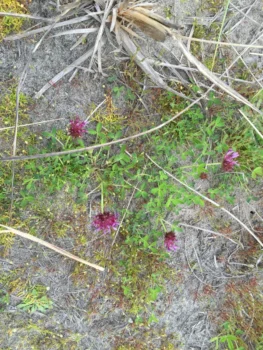
Cow Clover: A Hardy Native Ground Cover for Western Gardens
If you’re looking for a tough, reliable ground cover that supports local wildlife and adds delicate beauty to your landscape, cow clover might just be the perfect addition to your native garden. This unassuming little wildflower packs a big punch when it comes to ecological benefits and adaptability.
What is Cow Clover?
Cow clover (Trifolium wormskioldii) is a native North American clover species that belongs to the legume family. Unlike its more familiar cousin, white clover, this hardy perennial (though it can also behave as an annual) sports charming red to pink flowers and has earned its place as a valuable component of western ecosystems.
This low-growing forb typically reaches about 3.5 feet in height with a spreading, rhizomatous growth habit that creates attractive ground-covering mats. Its classic three-leaflet clover leaves are fine-textured and green, while the small, rounded flower heads bloom from late spring through summer, creating a subtle but lovely display.
Where Does Cow Clover Grow Naturally?
Cow clover is truly a western native, naturally occurring across a vast range that includes Alaska, western Canada, and much of the western United States. You’ll find it thriving in states from Washington and Oregon down to California, and eastward through the Rocky Mountain region including Montana, Wyoming, Colorado, Utah, Idaho, Nevada, Arizona, New Mexico, and even parts of Texas.
- Species observed
- No observations
Why Grow Cow Clover in Your Garden?
There are several compelling reasons to consider adding cow clover to your landscape:
- Native Plant Benefits: As a true native species, it supports local ecosystems and requires less water and maintenance than non-native alternatives
- Nitrogen Fixation: Like all legumes, cow clover has a medium level of nitrogen fixation, naturally enriching your soil
- Pollinator Support: The red flowers attract bees, butterflies, and other beneficial insects throughout the growing season
- Versatile Ground Cover: Its spreading habit makes it excellent for filling in naturalized areas and preventing erosion
- Low Maintenance: Once established, it requires minimal care and has moderate drought tolerance
Perfect Garden Settings
Cow clover shines in several types of garden settings:
- Native plant and wildflower gardens
- Meadow-style landscapes
- Rain gardens and bioswales
- Restoration and naturalization projects
- Informal ground cover areas
- Slopes and areas prone to erosion
Growing Conditions and Care
One of cow clover’s greatest strengths is its adaptability to various moisture conditions. While it’s classified as a facultative wetland plant in most regions (meaning it usually prefers moist conditions but can tolerate drier sites), it’s quite flexible in its requirements.
Soil Preferences: Cow clover adapts best to medium-textured soils with a pH between 6.2 and 7.0. It has high tolerance for calcium carbonate and medium tolerance for salt.
Light Requirements: This adaptable plant thrives in full sun but tolerates intermediate shade levels, making it useful for a variety of garden locations.
Water Needs: While it has low drought tolerance, cow clover has medium moisture requirements and can handle periodic flooding thanks to its medium anaerobic tolerance.
Climate Adaptability: Hardy to temperatures as low as -28°F, cow clover grows well in USDA zones 3-9 and requires a minimum of 90 frost-free days.
Planting and Establishment
Growing cow clover from seed is your best option, as it’s not commonly available through commercial nurseries. Here’s how to get started:
- Seeding Rate: With approximately 756,000 seeds per pound, a little goes a long way
- Best Planting Time: Fall or early spring planting works best
- Germination: No cold stratification is required, and seedlings show medium vigor
- Establishment: Be patient – both seed spread and vegetative spread rates are slow, but the wait is worth it
- Spacing: Allow room for the plant’s decumbent (sprawling) growth habit
Maintenance and Long-term Care
Once established, cow clover is refreshingly low-maintenance. The plant has a moderate growth rate and lifespan, with active growth occurring during spring and summer. After any disturbance, regrowth is slow, so avoid foot traffic in areas where you want it to thrive.
The flowers typically fade by late summer, and brown seeds become conspicuous in fall, adding subtle textural interest to the landscape. The plant doesn’t retain its leaves through winter, and foliage becomes quite porous, allowing for good air circulation.
The Bottom Line
Cow clover may not be the showiest plant in your garden, but its quiet beauty, ecological benefits, and adaptability make it a valuable addition to western native landscapes. Whether you’re creating a meadow garden, establishing a rain garden, or simply looking for a native ground cover that supports local wildlife, this hardy little legume deserves serious consideration. Just remember to be patient during establishment – good things come to those who wait!