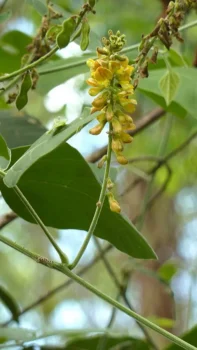
Crabseye: A Native Caribbean Climbing Bean You Should Know About
Meet the crabseye (Rhynchosia phaseoloides), a charming native climbing plant that’s been quietly thriving in the Caribbean long before anyone thought to put it in a garden catalog. This perennial climber belongs to the bean family and brings a touch of wild Caribbean character to any landscape lucky enough to host it.
What Makes Crabseye Special
Crabseye is a true Caribbean native, calling Puerto Rico and the U.S. Virgin Islands home. As a twining, climbing plant, it can develop both woody and herbaceous stems that love to scramble up whatever support they can find. Think of it as nature’s way of adding vertical interest to the landscape – no planning required!
This plant grows naturally in Puerto Rico and the Virgin Islands, where it’s perfectly adapted to the local climate and conditions.
- Species observed
- No observations
Why Consider Growing Crabseye
If you’re gardening in Puerto Rico or the U.S. Virgin Islands, here’s why crabseye deserves a spot on your plant wish list:
- True native credentials: Supporting local ecosystems has never been easier
- Climbing habit: Perfect for adding height and structure to garden spaces
- Perennial nature: Once established, it’s in it for the long haul
- Low-maintenance potential: Native plants typically require less fussing once they settle in
Where It Thrives in the Garden
As a facultative upland plant, crabseye usually prefers well-drained areas but won’t throw a tantrum if it occasionally gets its feet wet. This flexibility makes it a great choice for various garden situations, from slopes to garden borders where drainage varies.
The climbing nature of crabseye makes it ideal for:
- Training up trellises or arbors
- Naturalizing along fence lines
- Adding structure to native plant gardens
- Creating habitat in wildlife-friendly landscapes
Growing Crabseye Successfully
Here’s where we hit a bit of a mystery – detailed cultivation information for crabseye is surprisingly scarce. This likely means it’s not commonly grown in traditional gardens, despite being a lovely native option. What we do know suggests it’s probably quite adaptable, given its native range and facultative upland status.
For the adventurous gardener wanting to try crabseye:
- Provide some form of support for its climbing habit
- Choose a location with good drainage, though occasional moisture is tolerated
- Start with locally sourced plants or seeds when possible
- Give it space to climb and spread naturally
A Plant Worth Exploring
Crabseye represents one of those wonderful native plants that hasn’t quite made it into mainstream gardening consciousness yet. For gardeners in Puerto Rico and the U.S. Virgin Islands, it offers a chance to grow something truly local and authentic to your landscape.
While detailed growing guides might be limited, sometimes the best garden adventures come from experimenting with plants that haven’t been over-studied and over-complicated by too much advice. If you can get your hands on some crabseye, you’ll be growing a piece of Caribbean botanical heritage – and who knows? You might just become the local expert on this charming native climber.
Just remember to source your plants responsibly and enjoy watching this native beauty find its place in your garden ecosystem.