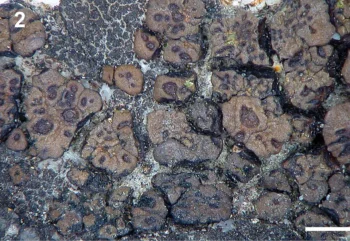
Discovering Cracked Lichen: A Tiny Rock Garden Wonder
Have you ever noticed those peculiar, crusty patches decorating rocks in your garden or on hiking trails? You might be looking at cracked lichen (Acarospora pyrenopsoides), a fascinating organism that’s neither plant nor animal, but something wonderfully unique in between.
What Exactly Is Cracked Lichen?
Cracked lichen is actually a remarkable partnership between a fungus and algae, working together as one organism. This cooperative relationship, called symbiosis, allows them to thrive in places where neither could survive alone. The fungus provides structure and protection, while the algae produces food through photosynthesis – nature’s perfect roommate arrangement!
As a native species to North America, particularly thriving in the western regions, cracked lichen has been quietly decorating our rocky landscapes for centuries. You’ll typically find these grayish-white to brownish crusty patches spreading across exposed rock surfaces in arid and semi-arid areas.
Spotting Cracked Lichen in Your Landscape
True to its common name, cracked lichen forms distinctive patterns that look like a puzzle of small, angular pieces. Here’s how to identify it:
- Forms crusty, cracked patches that appear puzzle-like on rock surfaces
- Colors range from grayish-white to light brown
- Grows directly on exposed rocks, particularly in sunny, dry locations
- Individual sections are typically small, usually less than an inch across
- Surface appears somewhat dusty or powdery when dry
Is Cracked Lichen Good for Your Garden?
While you can’t exactly plant cracked lichen like you would a flower, its presence in your landscape is actually quite beneficial:
- Natural rock beautification: It adds subtle color and texture to otherwise plain rock surfaces
- Ecosystem indicator: Its presence suggests good air quality, as lichens are sensitive to pollution
- Soil building: Over very long periods, lichens help break down rock surfaces, contributing to soil formation
- Low maintenance appeal: Requires absolutely no care from you once established
Supporting Cracked Lichen in Your Space
You can’t cultivate cracked lichen like traditional plants, but you can create conditions that welcome it:
- Preserve existing rock outcroppings and stone features
- Avoid using harsh chemicals or power washing on rock surfaces
- Maintain good air quality around your property
- Allow natural weathering processes on stone surfaces
The Patient Garden Guest
If you’re hoping to see cracked lichen appear in your rock garden, patience is key. Lichens are notoriously slow growers, sometimes taking years or even decades to establish visible colonies. However, their longevity is impressive – some lichen colonies can live for hundreds of years!
Rather than trying to introduce cracked lichen to your garden, consider appreciating it when you encounter it naturally. Its quiet presence adds an element of ancient wisdom to any landscape, reminding us that some of nature’s most interesting partnerships happen right under our noses – or in this case, right on our rocks.
Next time you’re exploring rocky areas in your garden or local trails, take a moment to appreciate these tiny cooperative communities. They’re living proof that sometimes the most successful relationships in nature come from the most unlikely partnerships.