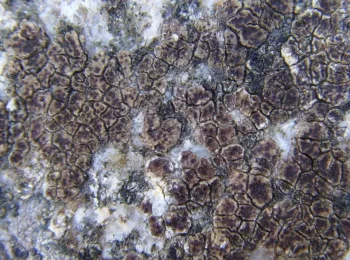
Cracked Lichen: The Resilient Rock Dweller You Might Already Have
If you’ve ever noticed crusty, cracked patches on rocks or concrete surfaces around your property, you might have encountered cracked lichen (Acarospora smaragdula) without even realizing it! This fascinating organism isn’t actually a plant at all, but rather a unique partnership between fungi and algae that creates some pretty remarkable living art on hard surfaces.
What Exactly Is Cracked Lichen?
Cracked lichen belongs to a group of organisms that are neither plant nor animal, but something wonderfully in-between. Think of it as nature’s way of making the most barren surfaces come alive. This particular species, also known by its synonym Acarospora rufescens, is native to North America and has mastered the art of thriving where most other life forms would simply give up.
The cracked part of its name comes from its distinctive appearance – it forms crusty patches that develop characteristic cracks or segments called areoles, giving it a puzzle-piece-like appearance that’s actually quite charming once you know what you’re looking at.
Where You’ll Find This Hardy Survivor
As a North American native, cracked lichen has spread across various regions of the continent, particularly favoring areas with calcareous rocks and limestone surfaces. You might spot it in arid and semi-arid landscapes, but don’t be surprised if it shows up on that old concrete wall or limestone garden border you’ve been meaning to replace.
Identifying Cracked Lichen
Here’s what to look for when trying to identify this resilient little organism:
- Crusty, flat patches that seem glued to rock or concrete surfaces
- Greenish to brownish coloration that may appear grayish when dry
- Distinctive cracked or segmented appearance, like a natural mosaic
- Typically found on limestone, concrete, or other calcium-rich surfaces
- Patches can range from small spots to larger colonies several inches across
Is Cracked Lichen Beneficial for Your Garden?
While you won’t be planting cracked lichen in your flower beds anytime soon, this hardy organism actually provides several ecological benefits that can enhance your outdoor space:
- Soil formation: Over time, lichens help break down rock surfaces, contributing to soil development
- Ecosystem foundation: They provide habitat and food sources for various small creatures
- Air quality indicator: Healthy lichen populations often indicate good air quality
- Natural weatherproofing: They can help protect surfaces from erosion
Living with Cracked Lichen
The beauty of cracked lichen is that it requires absolutely zero maintenance from you. It’s already perfectly adapted to survive extreme temperature swings, drought conditions, and general neglect. If you have limestone features, rock walls, or even old concrete structures in your landscape, consider any lichen growth a sign of a healthy, balanced ecosystem.
Rather than trying to remove these fascinating organisms, why not embrace them as part of your garden’s natural character? They add texture and visual interest to hardscaping elements while requiring nothing from you in return – the ultimate low-maintenance landscape feature!
The Bottom Line
Cracked lichen might not be the showstopper blooms you’re used to thinking about when planning your garden, but it represents something equally valuable: nature’s incredible ability to find life in the most unlikely places. Next time you spot those crusty, cracked patches on your rocks or walls, take a moment to appreciate this remarkable organism that’s been quietly contributing to your local ecosystem all along.
Sometimes the best garden residents are the ones that choose you, rather than the other way around!