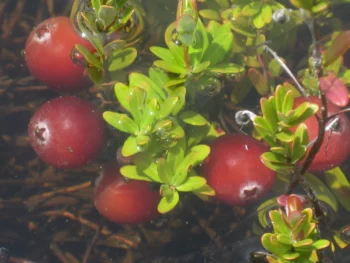
Growing Native Cranberries: A Unique Addition to Your Wet Garden Spaces
If you’ve ever wondered about growing your own cranberries, you’re in for a delightful surprise! The American cranberry (Vaccinium macrocarpon) isn’t just for commercial bogs – this charming native shrub can bring both beauty and bounty to the right home landscape. While it won’t thrive in your typical flower bed, cranberries offer something special for gardeners with wet, acidic conditions to work with.
What Makes Cranberries Special?
Vaccinium macrocarpon is a low-growing, perennial shrub that forms dense mats of glossy, evergreen foliage. Don’t expect a towering plant – cranberries stay close to the ground, rarely exceeding a foot in height but spreading several feet wide. In spring, they produce delicate pink or white bell-shaped flowers that dance above the foliage, followed by the iconic bright red berries we all know and love.
This native beauty is also known by the synonym Oxycoccus macrocarpus, though most gardeners simply call it cranberry or American cranberry.
Where Cranberries Call Home
As a true North American native, cranberries have an impressive natural range spanning from Canada down through much of the United States. You’ll find them growing wild in British Columbia, New Brunswick, Nova Scotia, Ontario, Prince Edward Island, Quebec, Northwest Territories, and Newfoundland. In the U.S., their range includes states from Maine to California, covering Connecticut, Delaware, Illinois, Indiana, Maryland, Massachusetts, Michigan, Minnesota, New Hampshire, New Jersey, New York, North Carolina, Ohio, Oregon, Pennsylvania, Rhode Island, Tennessee, Vermont, Virginia, Washington, West Virginia, and Wisconsin.
- Species observed
- No observations
The Wetland Wonder
Here’s where cranberries get really interesting – they’re what we call obligate wetland plants. This means they almost always occur in wetlands across all regions of North America. If you have a consistently soggy spot in your yard that makes you scratch your head wondering what to plant there, cranberries might just be your answer!
Perfect for Specialized Garden Settings
Cranberries aren’t your typical landscape shrub, and that’s exactly what makes them exciting for the right situation. They’re perfect for:
- Bog gardens and constructed wetlands
- Rain gardens with acidic soil
- Naturalized wetland edges
- Edible landscaping projects
- Erosion control on wet slopes
- Ground cover in consistently moist, acidic areas
Growing Conditions: It’s All About the Acid and Water
Successfully growing cranberries is all about mimicking their natural bog habitat. These plants are quite particular about their growing conditions:
- Soil: Highly acidic (pH 4.0-5.5), consistently moist to wet
- Light: Full sun to partial shade
- Water: Constant moisture is essential – think bog-like conditions
- Climate: Hardy in USDA zones 2-7
Planting and Care Tips
If you’re ready to try growing cranberries, here’s how to set them up for success:
- Test your soil pH first – you’ll likely need to amend with sulfur or peat moss to achieve the acidic conditions cranberries crave
- Ensure consistent moisture by choosing a naturally wet spot or installing irrigation
- Mulch with acidic materials like pine needles or peat moss
- Go easy on fertilizer – these plants are adapted to nutrient-poor bog conditions
- Be patient – cranberries are slow growers but long-lived once established
Benefits Beyond Beauty
Growing cranberries brings multiple benefits to your landscape. The spring flowers attract bees and other small pollinators, supporting local ecosystems. The dense, mat-forming growth habit makes excellent ground cover and helps prevent erosion in wet areas. And of course, you’ll get to harvest your own tart, antioxidant-rich berries for cooking and eating!
Is This Plant Right for You?
Cranberries are definitely a specialty plant that won’t work in every garden. They’re perfect for gardeners who have naturally wet, acidic conditions or who want to create a bog garden feature. If you love the idea of growing your own superfood berries and have the right conditions (or are willing to create them), cranberries can be a unique and rewarding addition to your landscape.
However, if you have typical garden soil that drains well, or if you’re looking for a low-maintenance ground cover, you might want to consider other native alternatives that are better suited to average garden conditions.
For those with the right setup, growing native cranberries offers the satisfaction of cultivating a truly unique North American plant while supporting local wildlife and enjoying homegrown berries. It’s definitely a conversation starter that adds both ecological value and edible interest to specialized garden spaces!