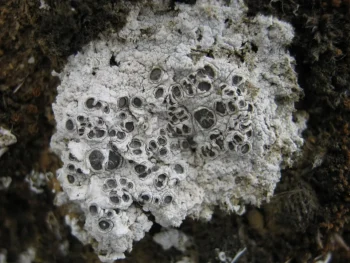
Crater Lichen: The Fascinating Rock Dweller You Never Knew You Had
Ever noticed those whitish, crusty patches on rocks in your garden and wondered what they were? Meet the crater lichen (Diploschistes diacapsis), a remarkable organism that’s probably been quietly decorating your stone surfaces without you even realizing it!
What Exactly Is Crater Lichen?
Despite its name suggesting it’s a plant, crater lichen is actually a fascinating partnership between a fungus and algae working together as one organism. This collaboration creates those distinctive crusty, white to pale gray patches you might spot on rocks, concrete, or stone walls around your property.
The crater part of its name comes from the small, cup-like structures (called apothecia) that appear on the surface, looking like tiny volcanic craters dotting the landscape of the lichen.
Where You’ll Find This Native Beauty
Crater lichen is native to North America and can be found across various regions, particularly thriving in drier climates. It’s quite the traveler, appearing on rock surfaces from coast to coast wherever conditions are just right.
Spotting Crater Lichen in Your Garden
Identifying crater lichen is easier than you might think once you know what to look for:
- White to pale gray crusty patches on rock surfaces
- Thick, somewhat warty texture that feels rough to the touch
- Small crater-like cups scattered across the surface
- Firmly attached to its rock host – it won’t peel off easily
- Often found alongside other lichen species in colorful communities
Is Crater Lichen Good for Your Garden?
Absolutely! While you can’t plant crater lichen like a traditional garden species, its presence is actually a wonderful sign. Here’s why crater lichen deserves your appreciation:
- Air quality indicator: Lichens are sensitive to air pollution, so their presence suggests you have relatively clean air
- Natural beauty: These crusty patches add texture and visual interest to rock gardens and stone features
- Low maintenance: They require absolutely zero care from you
- Ecosystem support: They contribute to the microscopic ecosystem living on rock surfaces
Living Conditions Crater Lichen Loves
If you’re hoping to encourage crater lichen in your landscape, understanding its preferences helps:
- Rock surfaces (natural stone, concrete, or masonry work best)
- Areas with good air circulation
- Spots that get some moisture but aren’t constantly wet
- Locations with moderate sunlight exposure
Should You Remove or Encourage It?
Here’s the thing about crater lichen – it’s virtually impossible to cultivate intentionally, and there’s really no need to remove it either. It won’t damage your rocks or structures, and it adds a natural, weathered character that many gardeners actually try to achieve artificially.
If crater lichen appears in your rock garden or on stone walls, consider it a free gift from nature. It’s a sign of a healthy outdoor environment and adds authentic natural beauty that money can’t buy.
The Bottom Line
Crater lichen might not be something you can add to your shopping list at the garden center, but it’s definitely something to appreciate when it shows up on its own. This hardy native organism represents thousands of years of evolution perfected for rock-dwelling life, and it’s doing its small part to make your garden ecosystem a little more complete.
So next time you spot those crusty white patches on your garden rocks, give them a little nod of appreciation. You’re looking at one of nature’s most successful partnerships, quietly thriving right in your own backyard!