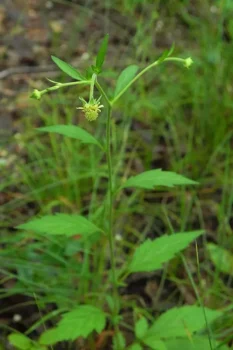
Cream Avens: A Subtle Native Wildflower for Shade Gardens
If you’re looking for a quietly charming native wildflower that won’t demand constant attention, cream avens (Geum virginianum) might just be your perfect match. This unassuming perennial brings gentle beauty to shaded corners of your garden while supporting local wildlife—though there are a few important things to know before you plant it.
What is Cream Avens?
Cream avens is a native North American perennial that belongs to the rose family. As its name suggests, this modest wildflower produces small, cream-colored to pale yellow flowers that appear in late spring to early summer. Don’t expect a showy display—cream avens is more about subtle charm than bold statements.
This herbaceous plant (meaning it dies back to the ground each winter) typically grows as a forb, which is simply a fancy way of saying it’s a non-woody flowering plant. You might also see it listed under its botanical synonyms Geum flavum or Geum hirsutum in older references.
Where Does Cream Avens Grow Naturally?
Cream avens has quite an impressive native range across eastern North America. You’ll find this adaptable plant growing naturally from southeastern Canada down through 26 U.S. states, including Alabama, Arkansas, Connecticut, Delaware, Georgia, Illinois, Indiana, Kentucky, Maryland, Massachusetts, Michigan, Minnesota, Missouri, New Jersey, New York, North Carolina, Ohio, Pennsylvania, Rhode Island, South Carolina, Tennessee, Vermont, Virginia, West Virginia, and Wisconsin, plus Ontario, Canada and Washington D.C.
- Species observed
- No observations
Important Rarity Consideration
Here’s something crucial to know: cream avens has a rarity status of S2 in Alabama, meaning it’s considered imperiled in that state. If you’re gardening in Alabama or anywhere this plant might be uncommon, please only purchase cream avens from reputable native plant nurseries that propagate their own stock rather than wild-collecting. This helps protect wild populations while still allowing you to enjoy this lovely native.
Why Grow Cream Avens in Your Garden?
There are several compelling reasons to consider cream avens for your native garden:
- True native credentials: This plant has been part of North American ecosystems for thousands of years
- Pollinator support: The flowers attract small bees, flies, and other beneficial insects
- Low maintenance: Once established, cream avens pretty much takes care of itself
- Shade tolerance: Perfect for those tricky spots under trees where many flowers won’t bloom
- Naturalistic appeal: Ideal for woodland gardens and naturalized areas
Growing Conditions and Care
Cream avens is refreshingly easy-going about its growing conditions. Here’s what it prefers:
- Light: Partial to full shade (though it can handle some morning sun)
- Soil: Moist to moderately dry soils; adaptable to various soil types
- Hardiness: Zones 3-8, so it’s quite cold-tolerant
- Moisture needs: Varies by region—it can handle both wetland and upland conditions
The plant’s wetland status actually varies depending on where you live. In coastal areas, it tends to prefer wetter conditions, while in northern regions, it’s more commonly found in drier upland sites. This flexibility makes it a great choice for gardeners dealing with changing moisture conditions.
Design Ideas and Garden Placement
Cream avens works beautifully in several garden settings:
- Woodland gardens: Plant it as part of a native understory community
- Shade borders: Use it to fill in gaps between larger perennials
- Naturalized areas: Let it self-seed and form gentle colonies
- Native plant gardens: Combine with other regional natives for an authentic look
Since cream avens can self-seed (but isn’t aggressive about it), it’s perfect for gardeners who like a somewhat wild, naturalistic look. The heart-shaped basal leaves provide nice texture even when the plant isn’t flowering.
Planting and Care Tips
Getting cream avens established is straightforward:
- Plant in spring or fall when temperatures are moderate
- Add some compost or leaf mold to the planting area—it appreciates organic matter
- Water regularly the first year while it establishes
- After that, it’s quite drought-tolerant
- No need to fertilize—native plants prefer lean soils
- Let it go to seed if you want more plants naturally
The Bottom Line
Cream avens might not be the showiest flower in your garden, but it brings something valuable: authentic native character and gentle, understated beauty. It’s particularly perfect for gardeners who want to support local ecosystems while enjoying a low-maintenance perennial that actually thrives in shade.
Just remember to source it responsibly, especially if you’re in areas where it might be uncommon. Your local native plant society or extension office can often recommend reputable nurseries that propagate rather than wild-collect their plants.
Sometimes the most rewarding garden plants are the quiet ones that simply belong.