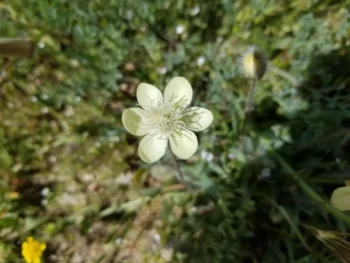
Creamcups: A Delicate Native Wildflower for Western Gardens
If you’re looking for a charming native wildflower that brings subtle beauty to your garden without demanding much attention, creamcups (Platystemon californicus) might just be your perfect match. This delicate annual belongs to the poppy family and offers a gentle, understated presence that complements bolder native plants beautifully.
What Are Creamcups?
Creamcups are small, annual wildflowers native to the western United States. True to their common name, these lovely plants produce cream-colored to pale yellow flowers that have a papery, almost translucent quality. The blooms sit atop slender stems above fuzzy, grayish-green foliage, creating an overall soft and ethereal appearance in the garden.
As an annual forb, creamcups complete their entire life cycle in one growing season. They’re herbaceous plants without woody tissue, making them perfect for filling in gaps between perennial natives or creating seasonal interest in wildflower meadows.
Where Do Creamcups Grow Naturally?
Creamcups are native to several western states, including California, Arizona, Oregon, Utah, and interestingly, they can also be found in the District of Columbia. Their primary range centers on California, where they’re particularly common in the state’s diverse ecosystems.
- Species observed
- No observations
Why Plant Creamcups in Your Garden?
There are several compelling reasons to consider adding creamcups to your native plant palette:
- Low maintenance: Once established, these natives require minimal care and watering
- Pollinator friendly: The flowers attract native bees and other beneficial insects
- Natural reseeding: Creamcups readily self-sow, creating naturalistic drifts over time
- Drought tolerant: Perfect for water-wise gardens and xeriscaping
- Gentle beauty: Provides subtle, sophisticated color rather than bold statements
Best Garden Settings for Creamcups
Creamcups shine in several garden styles and situations:
- Native plant gardens: Excellent companion for other western natives
- Wildflower meadows: Creates natural-looking drifts and fills
- Rock gardens: Thrives in well-draining, sandy conditions
- Naturalistic landscapes: Perfect for informal, low-maintenance areas
- Spring ephemeral displays: Provides early season color before summer heat
Growing Conditions and Care
Creamcups are refreshingly easy to grow, especially if you can provide conditions similar to their native habitat:
Sunlight: Full sun is best, though they’ll tolerate light shade
Soil: Well-draining soils are essential. Sandy, rocky, or gravelly soils work wonderfully. Heavy clay that holds moisture may cause problems.
Water: Low water requirements once established. In fact, overwatering can be detrimental to these drought-adapted natives.
Climate: Best suited for USDA hardiness zones 8-10, though as annuals, they’re more limited by heat and moisture than cold temperatures.
Planting and Care Tips
Getting creamcups established in your garden is straightforward:
- Timing: Sow seeds in fall or early spring when natural rains provide moisture
- Method: Direct sowing works best – these plants don’t love being transplanted
- Spacing: Scatter seeds naturally or plant about 6-12 inches apart
- Watering: Provide gentle moisture until germination, then reduce watering significantly
- Maintenance: Minimal care needed – let them complete their natural cycle and drop seeds for next year
Potential Considerations
While creamcups are generally wonderful garden additions, keep a few things in mind:
- As annuals, they provide temporary rather than permanent structure
- They prefer regions with Mediterranean or semi-arid climates
- In very humid conditions, they may struggle with fungal issues
- Their subtle flowers might get lost among more dramatic bloomers
The Bottom Line
Creamcups offer native plant gardeners a delightful way to add gentle, naturalistic beauty to their landscapes. While they may not be the showstoppers of the garden, their understated charm, low maintenance requirements, and ecological benefits make them valuable additions to western native plant gardens. If you’re building a wildflower meadow, creating a drought-tolerant landscape, or simply want to support native pollinators with minimal effort, creamcups deserve a spot on your planting list.
Their ability to self-sow means that once you establish them successfully, you’ll likely enjoy their quiet presence for years to come – a perfect example of how native plants can work with, rather than against, natural processes in your garden.