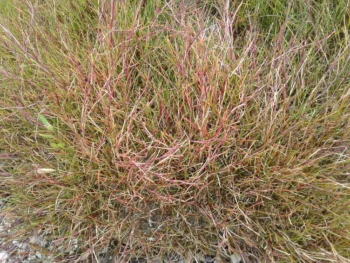
Creeping Alkaligrass: The Tough-as-Nails Native Grass for Extreme Conditions
If you’re dealing with salty, soggy soil that makes other plants throw in the towel, let me introduce you to creeping alkaligrass (Puccinellia phryganodes). This remarkably hardy native grass might just be the solution to your most challenging gardening spots – though it’s definitely not your typical lawn substitute!
What is Creeping Alkaligrass?
Creeping alkaligrass is a perennial graminoid (that’s botanist-speak for grass-like plant) that’s as tough as they come. True to its name, this low-growing grass spreads by creeping along the ground, forming dense mats that can handle conditions that would make most plants wave the white flag.
This hardy native has earned its stripes in some of the harshest environments on Earth, from Arctic tundra to salt marshes. It’s classified as an obligate wetland plant in Alaska, meaning it almost always calls wetlands home.
Where Does This Tough Grass Come From?
Creeping alkaligrass is a true North American native with an impressive range spanning Alaska, Canada, and Greenland. In Canada, you’ll find it growing naturally across Manitoba, New Brunswick, Ontario, Quebec, Yukon, Northwest Territories, Nunavut, Labrador, and Newfoundland. Talk about a plant that knows how to handle the cold!
- Species observed
- No observations
Should You Plant Creeping Alkaligrass?
Here’s the thing about creeping alkaligrass – it’s incredibly specialized. This isn’t a grass you’d plant for a pretty lawn or general landscaping. Instead, consider it if you have:
- Saline or alkaline soil conditions
- Areas prone to flooding or standing water
- Coastal properties dealing with salt spray
- Restoration projects in wetland areas
- Extremely cold climates (USDA zones 1-4)
The Good and the Challenging
Why you might love it:
- Thrives where other plants fail
- Excellent for erosion control
- Extremely cold hardy
- Low maintenance once established
- Supports native ecosystems
Why it might not be for you:
- Limited ornamental value
- Requires very specific growing conditions
- Not suitable for typical garden settings
- Can be difficult to source
Growing Creeping Alkaligrass Successfully
If you’ve determined that creeping alkaligrass fits your unique growing situation, here’s how to help it thrive:
Ideal Growing Conditions
- Soil: Saline, alkaline, or brackish soils
- Moisture: Wet to consistently moist conditions
- Light: Full sun
- Climate: Cold, harsh conditions (zones 1-4)
Planting Tips
- Best planted in spring after the last frost
- Ensure soil has adequate salt content – this grass actually needs it!
- Plant in areas that receive regular moisture or flooding
- Space plants to allow for spreading growth habit
Care and Maintenance
- Minimal care required once established
- Tolerates and even benefits from periodic flooding
- No fertilization needed – it’s adapted to nutrient-poor conditions
- May go dormant in extreme cold but will return in spring
Wildlife and Ecosystem Benefits
While creeping alkaligrass might not be a showstopper for pollinators (it’s wind-pollinated like most grasses), it plays an important role in its native ecosystems. It provides ground cover and erosion control in sensitive wetland areas and helps stabilize shorelines and salt marshes.
The Bottom Line
Creeping alkaligrass isn’t going to win any beauty contests, and it’s definitely not for every garden. But if you’re dealing with challenging saline, wet conditions in a cold climate, this tough native grass could be exactly what you need. It’s proof that sometimes the most specialized plants are the most valuable – they fill niches that nothing else can handle.
Just remember: this is a plant for very specific situations. If your garden conditions don’t match its needs, you’ll both be happier if you choose something else. But if you’ve got that perfect storm of salty, soggy, cold conditions? Creeping alkaligrass might just be your new best friend.