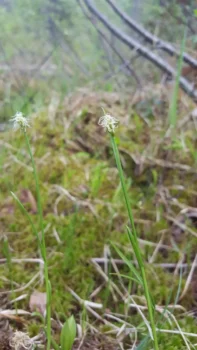
Creeping Sedge: The Perfect Groundcover for Your Wet Garden Spots
If you’ve got a soggy corner of your yard that makes you scratch your head wondering what on earth to plant there, let me introduce you to a fantastic native solution: creeping sedge (Carex chordorrhiza). This unassuming little powerhouse might not win any beauty contests, but it’s exactly what your wet garden spaces have been waiting for.
What Is Creeping Sedge?
Creeping sedge is a perennial grass-like plant that belongs to the sedge family (Cyperaceae). Don’t let the grass-like description fool you into thinking it’s just another lawn substitute – this plant has a very specific calling in life, and that’s thriving in wet conditions where other plants would throw in the towel.
As its name suggests, this sedge spreads by creeping along the ground, forming low, dense mats that rarely get taller than a few inches. It’s the kind of plant that works behind the scenes, quietly doing its job without demanding much attention.
Where Creeping Sedge Calls Home
This sedge is a true North American native with an impressive range. You’ll find it naturally occurring across Canada (from Alberta to Newfoundland), throughout Alaska, and in many northern U.S. states including Idaho, Maine, Michigan, Minnesota, Montana, New York, Vermont, Washington, and Wisconsin, among others. It even extends its range to Greenland and St. Pierre and Miquelon.
- Species observed
- No observations
The Wetland Specialist
Here’s where creeping sedge really shines: it’s classified as an Obligate Wetland plant across all regions of North America. In plain English, this means it almost always occurs in wetlands and absolutely loves having its feet wet. If you have a spot in your garden that stays consistently moist or even soggy, this plant will be happier there than a kid in a candy store.
Why Plant Creeping Sedge in Your Garden?
You might be wondering why you’d want such a specialized plant in your landscape. Here are some compelling reasons:
- Problem solver: It thrives in those challenging wet spots where other plants struggle or die
- Erosion control: The creeping habit and dense mat formation make it excellent for stabilizing soil along pond edges or in boggy areas
- Native plant benefits: Supporting local ecosystems and wildlife
- Low maintenance: Once established, it pretty much takes care of itself
- Hardy survivor: Thrives in USDA zones 2-7, handling harsh northern climates with ease
Perfect Garden Settings
Creeping sedge isn’t meant for your typical perennial border, but it’s perfect for:
- Rain gardens and bioswales
- Bog gardens
- Pond and stream margins
- Naturalistic wetland plantings
- Areas with poor drainage
- Native plant gardens focusing on wetland species
Growing Creeping Sedge Successfully
The good news is that if you can provide the right conditions, creeping sedge is remarkably easy to grow. Here’s what it needs:
Light Requirements
This adaptable sedge handles full sun to partial shade, though it tends to perform best with at least some direct sunlight during the day.
Soil and Moisture
The non-negotiable requirement is consistent moisture. We’re talking wet to saturated soils – the kind that would make most plants rot. Sandy or clay soils work fine as long as they stay moist.
Planting Tips
- Plant in spring or early fall when temperatures are moderate
- Space plants about 12-18 inches apart if you want faster coverage
- Make sure the planting area has reliable moisture year-round
- Mulching isn’t necessary since the plant forms its own living mulch
Care and Maintenance
Once established, creeping sedge is refreshingly low-maintenance. It doesn’t need fertilizing, and the main care it requires is ensuring consistent moisture. In natural settings, it can handle seasonal flooding and drought cycles, but in garden settings, consistent moisture will keep it happiest.
Setting Realistic Expectations
Let’s be honest – creeping sedge isn’t going to be the star of your garden’s beauty show. Its flowers are small and inconspicuous, and its overall appearance is more functional than fabulous. But sometimes the best plants are the ones that quietly solve problems while supporting the ecosystem.
While it doesn’t attract hordes of pollinators like some showy native flowers do, it provides habitat and food for various wetland wildlife species. Think of it as the dependable friend who’s always there when you need them, rather than the flashy showstopper.
The Bottom Line
If you’re dealing with wet, challenging spots in your landscape and want a native solution that actually thrives in those conditions, creeping sedge deserves serious consideration. It won’t win garden tours, but it will solve problems, support native ecosystems, and give you one less thing to worry about in your garden maintenance routine.
Sometimes the most valuable plants are the ones that do their job well without asking for applause – and creeping sedge fits that description perfectly.