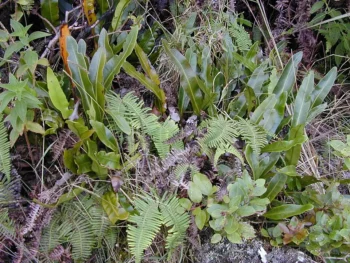
Creeping Tonguefern: A Rare Hawaiian Native Worth Protecting
Meet the creeping tonguefern (Elaphoglossum aemulum), a charming little Hawaiian native that’s as unique as its name suggests. This perennial fern might not win any size contests, but what it lacks in stature, it makes up for in character and ecological importance.
What Makes This Fern Special
The creeping tonguefern gets its common name from its distinctive tongue-shaped fronds and its habit of creeping along the ground or up tree trunks. Unlike the flashy ferns you might see at the garden center, this little beauty has small, leathery fronds that give it a refined, almost sculptural appearance. It’s classified as a forb – essentially a non-woody plant that lacks significant thickening by secondary growth.
Where You’ll Find It in the Wild
This fern is exclusively native to Hawaii, where it grows naturally across the island chain. You won’t find it anywhere else in the world, making it a true Hawaiian endemic species.
- Species observed
- No observations
A Word of Caution: Rarity Matters
Before you get too excited about adding this fern to your collection, there’s something important you need to know. The creeping tonguefern has a Global Conservation Status of S3, which means it’s considered vulnerable. With typically only 21 to 100 occurrences and between 3,000 to 10,000 individuals in the wild, this little fern needs our protection.
If you’re interested in growing this species, please only source it from reputable nurseries that propagate it responsibly – never collect it from the wild.
Growing Conditions and Care
The creeping tonguefern is definitely not a plant for beginners or those living outside tropical zones. Here’s what it needs to thrive:
- Climate: USDA hardiness zones 10-12 only
- Humidity: High humidity is essential
- Light: Filtered shade – direct sun will scorch its delicate fronds
- Soil: Well-draining but consistently moist
- Water tolerance: Facultative wetland status means it can handle both wet and moderately dry conditions
Perfect for Specialized Gardens
This isn’t your typical backyard fern, but it can be a showstopper in the right setting:
- Native Hawaiian landscapes
- Tropical shade gardens
- Terrarium displays
- Specialized fern collections
- Conservation gardens
What About Wildlife Benefits?
While specific wildlife benefits aren’t well-documented, like all native plants, the creeping tonguefern likely plays a role in its native ecosystem. As a fern, it doesn’t produce flowers for pollinators, but it may provide habitat for small insects and contribute to the overall biodiversity of Hawaiian forests.
The Bottom Line
The creeping tonguefern is a fascinating piece of Hawaiian natural heritage, but it’s not a plant for casual gardeners. Its vulnerability in the wild means we should appreciate it primarily through conservation efforts and responsible cultivation by serious fern enthusiasts. If you’re lucky enough to live in a tropical climate and can provide the specific conditions it needs, consider this fern a living treasure – one that connects your garden to the unique evolutionary story of the Hawaiian Islands.
Remember, with great ferns comes great responsibility. Let’s keep this little beauty thriving for future generations to enjoy.