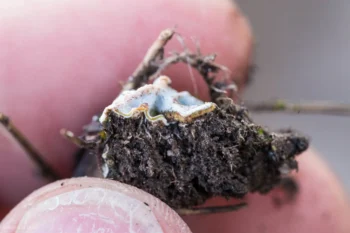
Crenate Fishscale Lichen: A Tiny Garden Guardian You Didn’t Know You Had
Have you ever noticed small, crusty patches growing on rocks or bare soil in your garden and wondered what they were? Meet the crenate fishscale lichen (Psora crenata), a fascinating organism that might already be calling your outdoor space home. This isn’t your typical garden plant – it’s actually a remarkable partnership between a fungus and algae that creates something entirely unique in the natural world.
What Exactly Is Crenate Fishscale Lichen?
Despite its name suggesting it’s a plant, Psora crenata is actually a lichen – a composite organism made up of a fungus living in a mutually beneficial relationship with algae. This North American native gets its fishscale nickname from its distinctive appearance, featuring small, overlapping structures with beautifully scalloped or crenate edges that do indeed resemble tiny fish scales.
You might also encounter this species in scientific literature under its synonyms Lecidea coroniformis or Lecidea crenata, but don’t let the fancy names intimidate you – this is simply a small but mighty contributor to your local ecosystem.
Where Does It Call Home?
Crenate fishscale lichen is native to North America, where it naturally occurs across various regions, particularly in areas with dry, rocky conditions. It’s most commonly found in western parts of the continent, thriving in arid and semi-arid environments where many other organisms struggle to survive.
How to Spot Crenate Fishscale Lichen
Identifying this lichen is like becoming a nature detective. Here’s what to look for:
- Small, crusty patches typically measuring just a few centimeters across
- Gray to brownish coloration that helps it blend with rocky surfaces
- Distinctive scalloped or crenate edges that give it the fishscale appearance
- Usually found growing directly on bare soil, rocks, or thin soil over rock
- Prefers areas with good air circulation and minimal foot traffic
Is It Beneficial in Your Garden?
While you can’t exactly plant or cultivate crenate fishscale lichen like you would a flower or shrub, its presence in your garden is actually a wonderful sign! Here’s why you should appreciate this tiny organism:
- Air quality indicator: Lichens are extremely sensitive to air pollution, so finding them suggests your garden enjoys relatively clean air
- Soil stabilization: They help prevent soil erosion by creating a protective crust on bare ground
- Ecosystem foundation: They contribute to the broader web of life, even if in ways that aren’t immediately obvious
- Low-maintenance beauty: They add subtle texture and interest to rock gardens or naturalized areas without requiring any care
Creating Lichen-Friendly Conditions
While you can’t grow crenate fishscale lichen from seed or cuttings, you can create conditions that welcome it and other beneficial lichens to your space:
- Minimize chemical use – lichens are sensitive to pollutants and chemicals
- Leave some areas of your garden undisturbed, especially rocky or gravelly spots
- Avoid excessive foot traffic in areas where you notice lichen growth
- Maintain good air circulation by not overcrowding plants
- Consider incorporating rock features or gravelly areas in naturalized sections of your landscape
A Word of Appreciation
The next time you’re wandering through your garden and spot what looks like tiny, scalloped patches on rocks or soil, take a moment to appreciate the crenate fishscale lichen. This remarkable organism represents millions of years of evolutionary partnership and serves as a living reminder that some of the most important garden inhabitants are the ones we barely notice. By creating spaces where lichens can thrive, you’re supporting biodiversity and maintaining the complex web of life that makes healthy ecosystems possible.
Remember, the best gardens aren’t just about what we intentionally plant – they’re about creating spaces where nature’s own intricate relationships can flourish, one tiny lichen at a time.