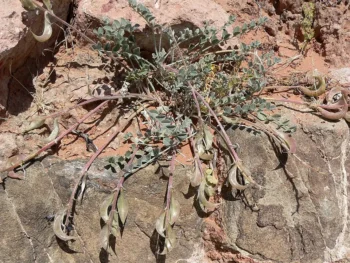
Crescent Milkvetch: A Charming Native Annual for Water-Wise Gardens
Looking for a delightful native plant that won’t demand much fuss but delivers plenty of charm? Meet the Crescent milkvetch (Astragalus amphioxys), a petite annual legume that’s perfectly suited for gardeners who appreciate subtle beauty and sustainable landscaping. This unassuming little wildflower might just become your new favorite for adding authentic southwestern character to your garden.
What Makes Crescent Milkvetch Special?
Crescent milkvetch is a true native of the American Southwest, naturally occurring across Arizona, Colorado, Nevada, New Mexico, Texas, and Utah. As an annual plant, it completes its entire life cycle in one growing season, making it a perfect choice for gardeners who enjoy watching their landscape evolve year after year.
- Species observed
- No observations
The plant gets its common name from its distinctive crescent-shaped seed pods, which are almost as ornamental as its flowers. These curved pods add an interesting architectural element to the garden long after the blooming period ends.
Garden Appeal and Design Role
Don’t expect towering drama from this modest beauty. Crescent milkvetch typically grows as a low, spreading annual that stays close to the ground. Its delicate purple to pink flowers appear in small clusters, creating a soft carpet of color that complements rather than competes with showier garden plants.
This plant shines in several garden settings:
- Native plant gardens where authenticity matters
- Xerophytic or drought-tolerant landscapes
- Wildflower meadows and naturalized areas
- Rock gardens with well-draining soil
- As groundcover in areas with poor soil
Benefits for Wildlife and Pollinators
Like many members of the legume family, Crescent milkvetch is a pollinator magnet. Its small but numerous flowers provide nectar and pollen for native bees, butterflies, and other beneficial insects. The plant also fixes nitrogen in the soil, improving growing conditions for neighboring plants—a true team player in the garden ecosystem!
Growing Conditions and Hardiness
One of the best things about Crescent milkvetch is its easygoing nature. This adaptable annual thrives in USDA hardiness zones 4 through 9, making it suitable for a wide range of climates across its native range.
For optimal growth, provide:
- Full sun exposure
- Well-draining, sandy or gravelly soil
- Minimal to no supplemental watering once established
- Poor to average soil fertility (rich soils may actually reduce flowering)
Planting and Care Tips
Growing Crescent milkvetch is refreshingly straightforward. Since it’s an annual, you’ll want to start from seed each year—though if you let some plants go to seed, you might find pleasant surprises popping up on their own!
Here’s how to get started:
- Timing: Direct sow seeds in fall or early spring when soil temperatures are cool
- Soil prep: Ensure good drainage; amend heavy clay soils with sand or gravel if needed
- Seeding: Scatter seeds lightly and barely cover with soil
- Watering: Water gently until germination occurs, then reduce watering significantly
- Maintenance: Virtually none required once established—this plant thrives on benign neglect!
Is Crescent Milkvetch Right for Your Garden?
This native annual is an excellent choice if you’re looking to create a more sustainable, water-wise landscape that supports local wildlife. It’s particularly valuable for gardeners in the Southwest who want to incorporate truly native species into their designs.
Consider Crescent milkvetch if you:
- Want to reduce water usage in your landscape
- Appreciate subtle, naturalistic beauty
- Are creating habitat for native pollinators
- Have challenging, dry areas that need groundcover
- Enjoy plants that self-seed and create natural drifts
While it may not provide the bold statement of larger perennials, Crescent milkvetch offers something equally valuable: authentic regional character, minimal resource requirements, and genuine ecological benefits. In a world of high-maintenance garden plants, sometimes the most beautiful choice is also the most sensible one.