Crested Yellow Orchid: A Rare Native Beauty That’s Better Left Wild
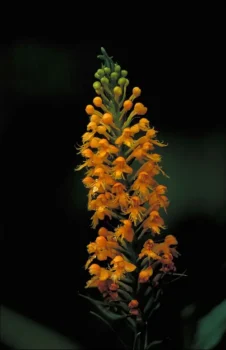
The crested yellow orchid (Platanthera cristata) is one of those native plants that makes you stop in your tracks when you’re lucky enough to spot one in the wild. With its bright yellow-orange fringed flowers dancing atop slender stems, this perennial orchid is absolutely stunning – but before you start planning where to plant one in your garden, there are some important things you need to know.
What Makes This Orchid Special
Also known by its scientific name Platanthera cristata, this native beauty belongs to a group of orchids that once went by different names – you might see it referenced as Blephariglotis cristata or Habenaria cristata in older field guides. But whatever you call it, this herbaceous perennial forb is unmistakably gorgeous when it blooms in mid to late summer.
The flowers are the real showstoppers – small but intensely colored yellow-orange blooms with distinctive fringed petals that give the plant its crested common name. These delicate flowers cluster together in dense spikes that can catch the light beautifully in their natural wetland habitats.
Where You’ll Find It Growing Wild
This orchid is native to the eastern United States, with populations scattered across Alabama, Arkansas, Connecticut, Delaware, Florida, Georgia, Kentucky, Louisiana, Maryland, Massachusetts, Mississippi, New Hampshire, New Jersey, New York, North Carolina, Pennsylvania, South Carolina, Tennessee, Texas, and Virginia. That might sound like a lot of states, but don’t let that fool you – this orchid is becoming increasingly rare across its range.
- Species observed
- No observations
The Reality Check: Why This Orchid Isn’t for Your Garden
Here’s where we need to have an honest conversation. While the crested yellow orchid is absolutely beautiful and you might be tempted to try growing one, this is a plant that’s better appreciated in its natural habitat. Here’s why:
- Rarity concerns: This orchid has concerning rarity status in multiple states – it’s ranked S1S2 in Arkansas and S3 in New Jersey, meaning it’s either critically imperiled or vulnerable
- Specialized needs: Like most native orchids, it requires specific mycorrhizal fungal partners to survive
- Cultivation challenges: It’s notoriously difficult to grow outside its natural wetland conditions
- Wetland requirements: This plant is classified as an obligate or facultative wetland species depending on region, meaning it needs consistently wet conditions
If You’re Determined to Try
If you absolutely must attempt growing this orchid, please only source plants from reputable native plant nurseries that propagate their own stock – never collect from wild populations. Here’s what you’d need to provide:
- Growing conditions: Consistently moist to wet, acidic soil with high organic matter content
- Light: Partial shade to dappled sunlight
- Hardiness: Suitable for USDA zones 4-9
- Soil type: Boggy, peaty, or consistently wet areas
Even with perfect conditions, success rates are typically very low for home gardeners.
Better Ways to Support This Species
Instead of trying to grow crested yellow orchids in your garden, consider these more impactful ways to help this rare species:
- Support wetland conservation organizations in your area
- Create pollinator-friendly gardens with easier-to-grow native plants that support the same butterflies and moths
- Participate in citizen science projects that monitor orchid populations
- Visit botanical gardens or nature preserves where you can appreciate these orchids in appropriate settings
The Takeaway
The crested yellow orchid is a testament to the incredible diversity of our native flora, but it’s also a reminder that not every beautiful plant belongs in our gardens. Sometimes the best way to love a plant is to protect its wild habitat and appreciate it from a respectful distance. If you’re looking to add native orchids to your landscape, consider working with local native plant societies to find species that are more suitable for cultivation and less conservation-sensitive.
Remember, every plant has its place – and for this lovely orchid, that place is in the wild wetlands where it has evolved to thrive.