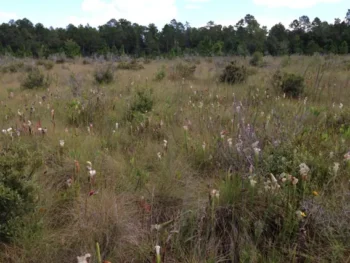
Crimson Pitcherplant: A Stunning Native Carnivore for Your Bog Garden
Meet one of North America’s most captivating carnivorous plants – the crimson pitcherplant (Sarracenia leucophylla). With its dramatic white-topped pitchers adorned with intricate red veining, this native beauty looks like something straight out of a fantasy novel. But don’t let its exotic appearance fool you – this perennial forb is as American as apple pie, calling the southeastern coastal plains home.
Where You’ll Find This Native Gem
The crimson pitcherplant is native to five southeastern states: Alabama, Florida, Georgia, Mississippi, and North Carolina. In the wild, you’ll discover these fascinating plants thriving in the acidic, nutrient-poor soils of bogs, wet pine savannas, and other wetland habitats along the coastal plain.
- Species observed
- No observations
A Conservation Success Story in Progress
Here’s something important every gardener should know: the crimson pitcherplant has a Global Conservation Status of S3, meaning it’s considered vulnerable in the wild. With typically only 21 to 100 occurrences and between 3,000 to 10,000 individuals remaining, this species needs our help. If you’re considering adding one to your garden, please ensure you’re purchasing from reputable nurseries that propagate plants responsibly rather than wild-collect them.
Why Gardeners Fall in Love with Crimson Pitcherplants
What’s not to love about a plant that’s both gorgeous and functional? These remarkable perennials can grow 2-4 feet tall, creating striking vertical elements in specialized garden settings. Their white-topped pitchers with red veining create an almost stained-glass effect that’s absolutely mesmerizing. Plus, they’re doing double duty – catching and digesting insects while adding incredible visual interest to your space.
Perfect Garden Partners
Crimson pitcherplants aren’t your typical border perennial – they have very specific needs that make them perfect for:
- Bog gardens and constructed wetlands
- Carnivorous plant collections
- Native plant rain gardens
- Container water features
- Specialized native wetland landscapes
Growing Conditions: It’s All About the Wetlands
As an obligate wetland plant, the crimson pitcherplant has non-negotiable requirements. Think of it as the plant equivalent of a fish – it absolutely must have consistently wet conditions to thrive. Here’s what these beautiful carnivores need:
- Sunlight: Full sun (6+ hours daily)
- Soil: Acidic, nutrient-poor conditions – sphagnum moss is ideal
- Water: Consistently moist to wet soil; use only distilled or rainwater
- Climate: USDA hardiness zones 7-10
- Humidity: High humidity levels
Planting and Care: Less is More
Here’s where crimson pitcherplants break all the traditional gardening rules. These plants have evolved to thrive in nutrient-poor environments, so your usual gardening approach needs a complete flip:
- Never fertilize: These plants get their nutrients from insects, not soil
- Use the right water: Tap water can kill them – stick to distilled water or rainwater
- Respect dormancy: They need a winter rest period with cooler temperatures
- Choose proper growing medium: Sphagnum moss, not regular potting soil
- Maintain moisture: Keep soil consistently wet but not completely waterlogged
Pollinator Benefits
While these plants are famous for catching insects, they also support pollinators! The crimson pitcherplant produces flowers that attract flies and other small insects for pollination, creating a fascinating balance in the ecosystem.
Is This Plant Right for Your Garden?
The crimson pitcherplant is perfect for gardeners who:
- Have or can create consistently wet growing conditions
- Want to support native plant conservation
- Are fascinated by carnivorous plants
- Have space for a specialized bog or wetland garden
- Live in USDA zones 7-10
However, this might not be the right choice if you have dry garden conditions, can’t commit to specialized care requirements, or prefer low-maintenance plants.
Supporting Conservation Through Gardening
By choosing to grow responsibly sourced crimson pitcherplants, you’re not just adding a conversation starter to your garden – you’re participating in conservation efforts for this vulnerable species. Each plant grown in cultivation helps reduce pressure on wild populations while educating others about the importance of protecting our native wetland habitats.
Remember, the crimson pitcherplant isn’t just a plant – it’s a living piece of American natural heritage that deserves our protection and admiration. With the right conditions and responsible sourcing, you can enjoy this remarkable native carnivore while contributing to its conservation for future generations.