Crinkleroot: The Charming Native Spring Ephemeral for Your Woodland Garden
If you’re looking to add some early spring magic to your shade garden, let me introduce you to one of nature’s delightful surprises: crinkleroot (Cardamine diphylla). This native North American perennial might not win any awards for showiness, but what it lacks in flash, it more than makes up for in charm and ecological value.
What Makes Crinkleroot Special?
Crinkleroot is a true spring ephemeral – one of those wonderful plants that emerges early in the season, blooms, sets seed, and then quietly retreats as the forest canopy fills in above. You might also see it listed under its old scientific names, Dentaria diphylla or Dentaria incisa, but don’t let the name changes fool you – it’s the same delightful plant.
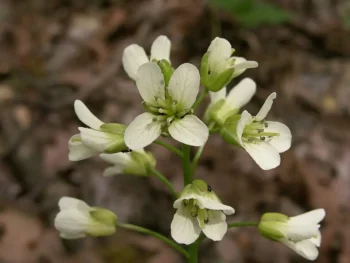
This herbaceous perennial forb produces clusters of small, white, four-petaled flowers that appear in early spring, often before the trees have fully leafed out. The flowers sit atop stems adorned with distinctive deeply divided, palmate leaves that give the plant its character. True to its common name, the leaves have a somewhat wrinkled or crinkled appearance that makes identification easy once you know what to look for.
Where Crinkleroot Calls Home
As a native species, crinkleroot has an impressive natural range across eastern North America. You’ll find it growing wild from Canada down through the eastern United States, including Alabama, Arkansas, Connecticut, Delaware, Georgia, Illinois, Indiana, Kentucky, Maine, Maryland, Massachusetts, Michigan, Minnesota, Mississippi, Missouri, New Hampshire, New Jersey, New York, North Carolina, Ohio, Pennsylvania, South Carolina, Tennessee, Vermont, Virginia, West Virginia, and Wisconsin, plus several Canadian provinces.
- Species observed
- No observations
It’s worth noting that in New Jersey, crinkleroot has a rarity status of S3 (Highlands Listed), meaning it’s somewhat uncommon in that region. However, across most of its range, it’s stable and readily available from native plant sources.
Why Your Garden (and Local Wildlife) Will Love It
Crinkleroot shines brightest in woodland and shade gardens where its early blooms provide crucial nectar for emerging pollinators. When most other plants are still sleeping, crinkleroot is already serving up a welcome meal for early bees, flies, and other beneficial insects. This makes it an invaluable addition to any pollinator-friendly landscape.
From a design perspective, crinkleroot works beautifully as:
- Groundcover in naturalized woodland areas
- Part of a spring ephemeral collection
- Underplanting for trees and shrubs
- Addition to shade perennial borders
Growing Crinkleroot Successfully
The beauty of native plants like crinkleroot is that they’re generally low-maintenance once you understand their needs. This plant thrives in USDA hardiness zones 3-8, making it suitable for most temperate gardens.
Ideal Growing Conditions
- Light: Partial to full shade (perfect for those tricky shady spots!)
- Soil: Moist, well-draining soil rich in organic matter
- Moisture: Consistent moisture, especially during spring growing season
- pH: Neutral to slightly acidic soil
Planting and Care Tips
Crinkleroot spreads naturally through underground rhizomes, which means it can slowly colonize an area – but don’t worry, it’s not aggressive. Plant it in spring or fall, spacing plants about 12 inches apart if you want quicker coverage.
Once established, crinkleroot is remarkably low-maintenance. Water during dry spells in spring, and add a layer of leaf mulch in fall to mimic forest conditions. The plant will naturally go dormant in summer, so don’t panic when it disappears – it’s just taking a well-deserved rest!
Understanding Its Water Preferences
Interestingly, crinkleroot’s relationship with water varies by region. In coastal areas, it’s considered an obligate upland plant that rarely occurs in wetlands. However, in other regions like the Eastern Mountains, Midwest, and Northeast, it’s classified as facultative upland, meaning it usually prefers non-wetland areas but can tolerate some moisture. This flexibility makes it adaptable to various garden conditions.
The Bottom Line
Crinkleroot might not be the flashiest plant in your garden, but it’s exactly the kind of steady, reliable native that forms the backbone of a healthy ecosystem. Its early spring blooms support pollinators when they need it most, its attractive foliage adds texture to shade gardens, and its low-maintenance nature makes it perfect for busy gardeners.
If you’re building a native plant garden, establishing a woodland landscape, or simply want to add some early spring interest to a shady spot, crinkleroot deserves a place on your planting list. Your local pollinators will thank you, and you’ll enjoy watching this charming ephemeral mark the arrival of each new growing season.