Crippled Cranefly: A Hidden Gem for Your Shade Garden
Meet one of North America’s most intriguing native orchids – the crippled cranefly (Tipularia discolor). Don’t let the quirky name fool you; this perennial beauty is anything but ordinary. With its distinctive two-toned leaves and delicate flower spikes, it’s a conversation starter that brings both mystery and elegance to woodland gardens.
What Makes Crippled Cranefly Special?
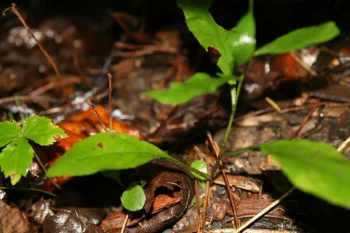
This native orchid stands out from the crowd with its unique foliage. The leaves are green on top and deep purple underneath – a stunning contrast that adds visual interest even when the plant isn’t blooming. During late summer, tall, slender flower spikes emerge, bearing small greenish or purplish flowers that dance gracefully in the breeze.
As a perennial forb, crippled cranefly lacks woody tissue but returns year after year, making it a reliable addition to your garden palette. It’s also known by the synonym Tipularia unifolia, though you’ll most commonly find it listed under its current botanical name, Tipularia discolor.
Where Does It Call Home?
This native beauty has quite the range across the lower 48 states. You’ll find wild populations thriving from the Northeast down to Florida and west to Texas. It grows naturally in Alabama, Arkansas, Delaware, District of Columbia, Florida, Georgia, Illinois, Indiana, Kentucky, Louisiana, Maryland, Massachusetts, Michigan, Mississippi, Missouri, New Jersey, New York, North Carolina, Ohio, Oklahoma, Pennsylvania, South Carolina, Tennessee, Texas, Virginia, and West Virginia.
- Species observed
- No observations
Perfect Spots in Your Garden
Crippled cranefly is tailor-made for shade gardens and woodland settings. It thrives in the dappled light beneath deciduous trees, making it perfect for those challenging shady spots where many plants struggle. Consider incorporating it into:
- Woodland gardens alongside native ferns and wildflowers
- Shade perennial borders for textural contrast
- Naturalized areas under mature trees
- Native plant collections focused on regional flora
Growing Conditions That Make It Happy
This orchid appreciates conditions that mimic its natural forest habitat. It generally prefers non-wetland conditions but can tolerate some moisture variation across different regions. In most areas, it functions as a facultative upland plant, meaning it usually grows in well-draining areas but can handle occasional wet conditions.
For best results, provide:
- Partial to full shade (morning sun is okay, but avoid harsh afternoon light)
- Well-draining soil rich in organic matter
- Consistent moisture without waterlogging
- A layer of leaf mulch to mimic forest floor conditions
Hardiness and Care
Hardy in USDA zones 4-9, crippled cranefly is surprisingly adaptable to different climates. Once established, it’s relatively low-maintenance, though patience is key – like many orchids, it may take time to settle in and reach its full potential.
The plant goes dormant in winter, so don’t worry when the foliage disappears. This is completely natural, and new growth will emerge in spring.
Wildlife and Pollinator Benefits
While not a major pollinator magnet, the small flowers do attract various native insects, including small bees and flies. The plant contributes to the overall biodiversity of your garden ecosystem, supporting the intricate web of native species relationships that make healthy gardens thrive.
Should You Plant Crippled Cranefly?
If you have a shaded garden and appreciate unique, native plants, crippled cranefly could be an excellent choice. It’s particularly appealing if you enjoy plants with interesting foliage and subtle beauty rather than flashy flowers. The two-toned leaves provide season-long interest, and the delicate flower spikes add an ethereal quality to late summer gardens.
However, this isn’t the plant for sunny locations or gardeners seeking bold, colorful displays. It’s best suited for those who appreciate understated elegance and want to support native ecosystems.
As with any native orchid, source your plants responsibly from reputable nurseries that propagate rather than wild-collect their stock. This ensures you’re supporting sustainable gardening practices while adding this charming native to your landscape.